Shenyang and Harbin to Jilin City Weekend Trip: Two Days by High-Speed Rail
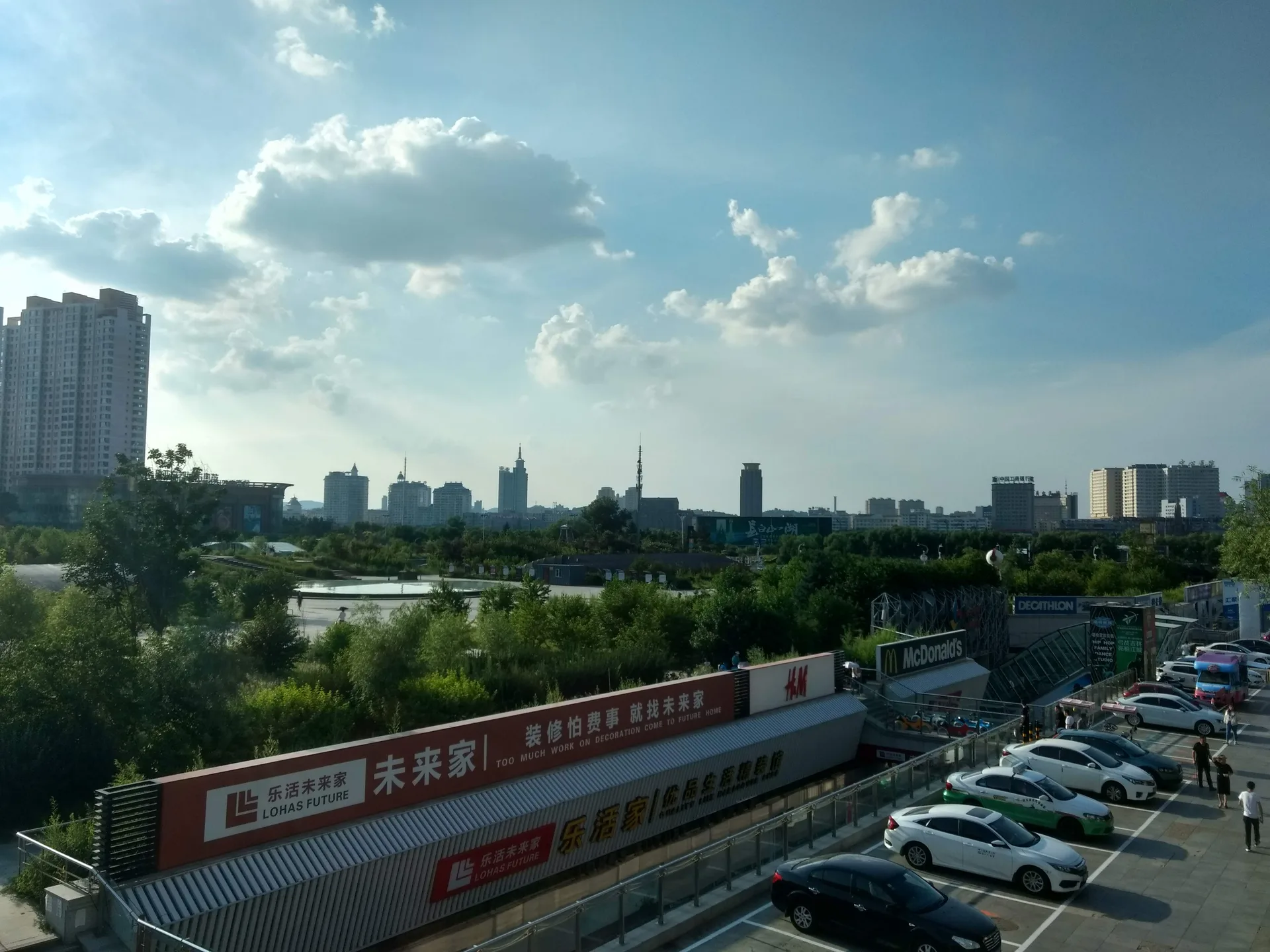
A weekend in Jilin City from Shenyang or Harbin is a two hour train ride each way, with a full Saturday in the city centre and one outing on Sunday. From Harbin the fastest trains take about 1 hour 53 minutes, and from Shenyang the fastest take about 2 hours, with second class fares roughly 120 to 185 RMB from Harbin and 170 to 260 RMB from Shenyang. Saturday covers the museum, Beishan Park, the riverside, and a night market dinner, and Sunday covers one outing, Rime Island in winter or Songhua Lake in warm months. Stay in one city centre hotel for both nights and let the train do the rest.
At a glance
- Place: Jilin City, Jilin Province, Northeast China, on the Songhua River
- Duration: Two days, Saturday morning to Sunday evening
- Base: One city centre hotel, within walking reach of the riverfront
- Getting there: High-speed rail from Harbin West, about 2 hours, or from Shenyang North, about 2 to 2.5 hours
- Tickets: General admission to Jilin City Museum is free. Beishan Park entry has been free since 2011. The riverside walk and Century Square are open public space
- Best season: December to February for winter rime mornings, warm months for the Songhua Lake boat and the Century Square fountain show
- Watch out: Jilin City Museum closes on Mondays except national holidays. Night market and snack street locations shift with season and enforcement, so ask your hotel for the current spot. The last direct trains back leave Jilin around 7:30 PM, so book the return when you book the outbound
- Getting around: On foot plus taxi or Didi in town. See the transport guide
Jilin City weekend in 30 seconds
- Saturday morning, 9 AM to 11 AM: Jilin City Museum at No. 100 Jilin Avenue, by Century Square. Free entry, closed Mondays. Start in the meteorite hall, where Jilin No. 1 weighs 1,770 kg.
- Saturday midday: A dumpling lunch downtown. Pork and cabbage suits cautious eaters, and the dumpling guide covers how to order by pointing.
- Saturday afternoon, 2 to 3 hours: Beishan Park in Chuanying District. Climb at an easy pace, visit one or two temple halls, and use the hilltop pavilions for the city view.
- Saturday dusk, 1 to 2 hours: The riverside walk along Songjiang Middle Road, from Linjiangmen Bridge toward Jilin Bridge, ending at Century Square.
- Saturday evening: Dinner at a night market. Graze on skewers and jianfen, the pan fried starch jelly.
- Sunday, one outing only: Rime Island at dawn in winter, or Songhua Lake and Fengman Dam in warm months. Return home on an evening train.
- Pace rule: One major site per half day on Saturday, and one outing on Sunday. A weekend that tries to add Changbai Mountain will fail on the timetable alone.
Getting there: two hours from Harbin, about two hours from Shenyang
Both cities sit on the high-speed network, and both routes are simple once you know the right station. The table below is a planning range, not a fixed fare list, since prices shift with train type and season. Check the live price on 12306 or Trip.com before you commit.
| Route | Fastest | Typical | Second class, roughly | Departs from |
|---|---|---|---|---|
| Harbin to Jilin | About 1 hour 53 minutes | 2 to 2.5 hours | 120 to 185 RMB | Harbin West |
| Shenyang to Jilin | About 2 hours | 2 to 2.5 hours | 170 to 260 RMB | Shenyang North |
From Harbin, about 12 direct high-speed trains run each day, the first leaves Harbin West around 6:20 AM and the last around 7:26 PM, and the trip covers roughly 250 kilometres. A few slower services with more stops run past 3 hours, so pick a G train when the timetable offers one. From Shenyang, trains leave roughly every hour through the day, and the trip covers about 420 kilometres. The fastest services take about 2 hours, most direct trains take 2 to 2.5 hours, and a few slower services with many stops run 3 hours or more, so again, pick the faster train when you have the choice.
The station is the one detail that ruins this trip. In Shenyang, Shenyang North is the main high-speed hub and carries almost every northbound service toward Jilin, and it sits on Metro Line 2. Shenyang Station, on Metro Line 1, sends a smaller number of trains toward Jilin. The two stations sit about 20 minutes apart by taxi in light traffic, and considerably longer at rush hour. Shenyang South sits far out in Hunnan and is rarely worth the detour, though one evening return train does end there, so read the arrival station as well as the departure station. In Harbin, Harbin West on Metro Line 3 handles nearly all direct high-speed trains to Jilin. Harbin Station sends a few services, and Harbin East almost never has a direct Jilin departure, so a ticket that says Harbin East is probably the wrong train.
Book on 12306, the railway booking platform, which has an English interface and accepts foreign passports, or on Trip.com with your passport and a small service fee. Tickets go on sale 15 days before departure, and winter weekend morning trains sell out days ahead, so book the outbound and the return together. The gate reader takes the passport itself, so carry the physical passport you booked with, and arrive 30 to 40 minutes early the first time for security and boarding.
The closest comparison for a visitor from abroad is a weekend rail hop like London to Bath: a big city base, a two hour train, and a smaller city that rewards a slow walk. The scale differs, Bath is a spa town and Jilin is a river city with a meteorite museum, but the rhythm is the same, and the ticket costs less than a dinner in either capital.
Saturday morning: Jilin City Museum, 9 AM to 11 AM
Take a train that arrives in Jilin before 9 AM, when the museum opens. From Shenyang North, a departure around 6 AM arrives around 8 AM. From Harbin West, the first train leaves around 6:20 AM and arrives around 8:30 AM. Jilin Railway Station sits at No. 1 Chongqing Street, close to the city centre, so a short taxi ride puts you at the museum, with time to drop bags at your hotel first.
Start at the Jilin City Museum at No. 100 Jilin Avenue, by Century Square on the south bank of the Songhua River. General admission is free, hours are 9 AM to 4:30 PM, and the museum closes on Mondays except national holidays. A Saturday and Sunday weekend is safe from the Monday trap, and only a Monday stay needs a change of plan.
Two permanent exhibitions carry the visit. The meteorite hall covers 2,060 square metres and is built around the March 8, 1976 shower, when a meteorite shower fell across about 500 square kilometres around Jilin City and Yongji County. Its centrepiece is Jilin No. 1, at 1,770 kg the largest single stony meteorite ever found. The history hall traces local development from the Neolithic Age to 1673, the year Wula City was founded in the Qing Dynasty. Allow 2 hours for both halls, and be ready to leave after one if the morning runs long. A third hall, on the Niu Zihou and Peking Opera story, is worth the extra half hour only if the morning runs ahead of schedule.
Saturday midday: a dumpling lunch, sitting down
Walk or take a short taxi ride toward downtown for lunch, and sit down for it. Dumplings are the easy choice in this city: pork and cabbage for cautious eaters, pork and pickled cabbage for those who like a sour note, and lamb and spring onion for the adventurous. The dumpling guide covers how to order, and pointing plus holding up fingers for quantity works at any dumpling shop. Keep the meal to about an hour, then move on while energy is still up. If you are still hungry after lunch, save the snacking for the night market, where grazing is the point.
Saturday afternoon: Beishan Park, 2 to 3 hours at an easy pace
Give the afternoon to Beishan Park, the hill park in Chuanying District, an easy city bus or taxi ride from the riverfront. Park entry has been free since January 1, 2011. Allow 2 to 3 hours at an easy pace, and expect the climb itself to be the afternoon activity rather than a transfer between sights.
Climb the stone steps in hall order, oldest first, but stop at one or two halls instead of touring all of them. Guandi Temple, dated 1701, is the oldest building on the hill, dedicated to Guan Yu, the third century general turned god of loyalty. Medicine King Temple, dated 1738, is dedicated to the Medicine King tradition, and locals come here to pray for health. Jade Emperor Pavilion, dated 1776, is the largest temple in the complex, dedicated to the Jade Emperor, the supreme god of the Taoist pantheon. One hall gives you the idea of the place, and the hilltop pavilions give the best city views. The West Peak stands 269.8 metres high, about 60 metres above the city, so the climb is real exercise and the view is the reward.
The temples are active places of worship, so keep a quiet voice, skip flash where worshippers are praying, and follow posted rules. The park address is No. 51 Desheng Road, and buses 7 and 107 stop at Beishan, with bus 8 at Deshengmen and buses 1 and 101 at Shuimendong. The park sits about 4 kilometres from the railway station, around 15 minutes by taxi.
Saturday dusk and evening: the riverside and the night market
Come down from the hill and take the riverside walk along Songjiang Middle Road, from Linjiangmen Bridge toward Jilin Bridge, ending at Century Square. The bridge dates to 1994 and runs 686 metres across the river, and the square covers 22.8 hectares, so the walk ends in open space after a day of halls and steps.
In warm months the square runs three music fountains, each about 50 metres high, which is the evening show. In winter the fountains stop in freezing weather, and the evening show becomes the lit bridges and, on a good morning, rime on the riverside trees. Either way, keep this stretch short and easy, since it is the wind down before dinner rather than another sight to conquer.
End Saturday at a night market. Eat the way locals eat at night: standing up, pointing, and grazing. Start with jianfen, starch jelly sliced and pan fried crisp, tossed with chili oil, vinegar, and savoury sauce, then add grilled skewers and a steamed bun if you are still hungry. A full grazing dinner rarely breaks 30 RMB per person in the existing street food guide, so this is the cheapest meal of the weekend. One honest caveat belongs here. Snack streets and night markets shift with season and enforcement, so this guide does not name one fixed street as the dinner stop. Ask your hotel front desk for the current night market. The rule that never fails is turnover: eat where locals queue and the food is cooked in front of you.
Sunday: one outing, chosen by season
Sunday is one outing, not two, and the season picks it. Book transport the night before, since both options need an early start.
In winter, from December to February, Sunday belongs to Rime Island. Leave at 5:30 AM, since the best light runs from 6 to 9 AM, and the island sits about 40 kilometres from the city. The rime guide covers how to read the daily star rating before you go, and the rule is simple: a three star morning is worth the trip, and a four or five star morning is the one to chase. Winter mornings can sit at minus 20 degrees or below, so the winter packing rules apply, with no cotton next to the skin and warm layers under a windproof shell. Return to the city by late morning, take a slow lunch, and catch an evening train home.
In warm months, Sunday belongs to Songhua Lake and Fengman Dam, about 20 kilometres from the city. Take bus 33 or 333, or a taxi of 30 to 40 minutes, to the dam and the lake. The old dam was built from 1937 to 1953, the new dam opened in 2019 with 1,480 MW, and nearly 400 metres of the old dam still stands beside it. The lake covers about 550 square kilometres, the largest artificial lake in the province, and boats run from Fengman wharf to Wuhu Island in about 50 minutes. The Fengman Dam and Songhua Lake guide covers the dam, the lake, and the fish lunch in full. Return to the city in the afternoon for a riverside coffee, then catch an evening train home.
If you are coming from Harbin, the pairing has a logic of its own. Harbin Ice and Snow World is carved by people, and Jilin rime is grown by the river and the cold, so the two stops show the same winter from opposite sides. If Sunday is wet, swap the outing for the rainy day plan instead: the museum again in the morning if you skipped a hall, the two small museums on Desheng Street, and a hotpot lunch. The rainy day guide covers that swap in full, and the Monday trap still applies if the rain falls on a Monday.
Where to stay and what it costs
Stay in one city centre hotel for both nights, within walking reach of the riverfront, and keep Saturday and Sunday on the same base. The where to stay guide covers the riverfront and station quarter options. Hotel prices shift with season and the rime weekends book early, so check the live price when you book the train, and do not trust a price quoted in a guide.
The weekend budget stays small. The return train costs roughly 240 to 370 RMB in second class from Harbin, and roughly 340 to 520 RMB from Shenyang. Museum and park entry are free, the riverside is open public space, and a grazing dinner rarely breaks 30 RMB per person. The main spending is the hotel, food, transport in town, and the Sunday outing, which is a boat fare at the lake or a booked transfer to the island at dawn.
How this weekend fits the longer trips
This weekend is the short cut of the 3 day itinerary, which adds Wulajie Manchu town on a third day, and the 5 day itinerary and 7 day itinerary add the lake, the town, and Changbai Mountain on later days. If you have a third day, Wulajie town, about 30 kilometres and about an hour away, is the natural add, and the Wulajie guide covers its old street and Qing dynasty houses. Changbai Mountain does not fit this weekend: it needs an overnight in Erdaobaihe, and the Changbai day trip guide says so plainly.
If you are touring the northeast as a loop, this weekend slots in cleanly. Shenyang, the former Qing capital, holds the Imperial Palace, and Harbin, the ice festival city, holds Central Street and the Ice and Snow World from late December to late February. Either city works as the base for this weekend, and both connect onward by rail, so the weekend can sit at the start, the middle, or the end of a longer northeast trip. The how to get to Jilin guide covers the full set of arrival routes, including Beijing and Changchun. If you are coming the other way, the Changchun weekend trip covers the same two days from the provincial capital, on a 40 minute train.
Practical notes
- The Monday trap: Jilin City Museum closes on Mondays except national holidays. A Saturday and Sunday weekend is safe, and only a Monday stay needs a change of plan.
- The wrong station: In Shenyang, most trains leave from Shenyang North, and a smaller number leave from Shenyang Station. In Harbin, nearly all direct trains leave from Harbin West, and Harbin East almost never has a direct Jilin departure. Check which station your ticket names before you leave your hotel.
- The Sunday return: The last direct high-speed trains leave Jilin around 7:30 PM in both directions. Book the return when you book the outbound, and plan Sunday backwards from that departure.
- Winter clothing: Winter mornings can sit at minus 20 degrees or below, so the winter packing rules apply, with no cotton next to the skin and warm layers under a windproof shell.
- Sunday transport: Book the Rime Island transfer or the lake taxi the night before. Both outings need an early start, and a Sunday morning without a booking wastes the best hours.
- Food safety: Eat where locals queue, watch the food cooked in front of you, and carry some yuan as backup to phone payment.
- What to skip: Changbai Mountain needs its own overnight. Save it for a longer trip, or for a return weekend when you have three days.