Jilin Rime Ice: The Complete Winter Guide
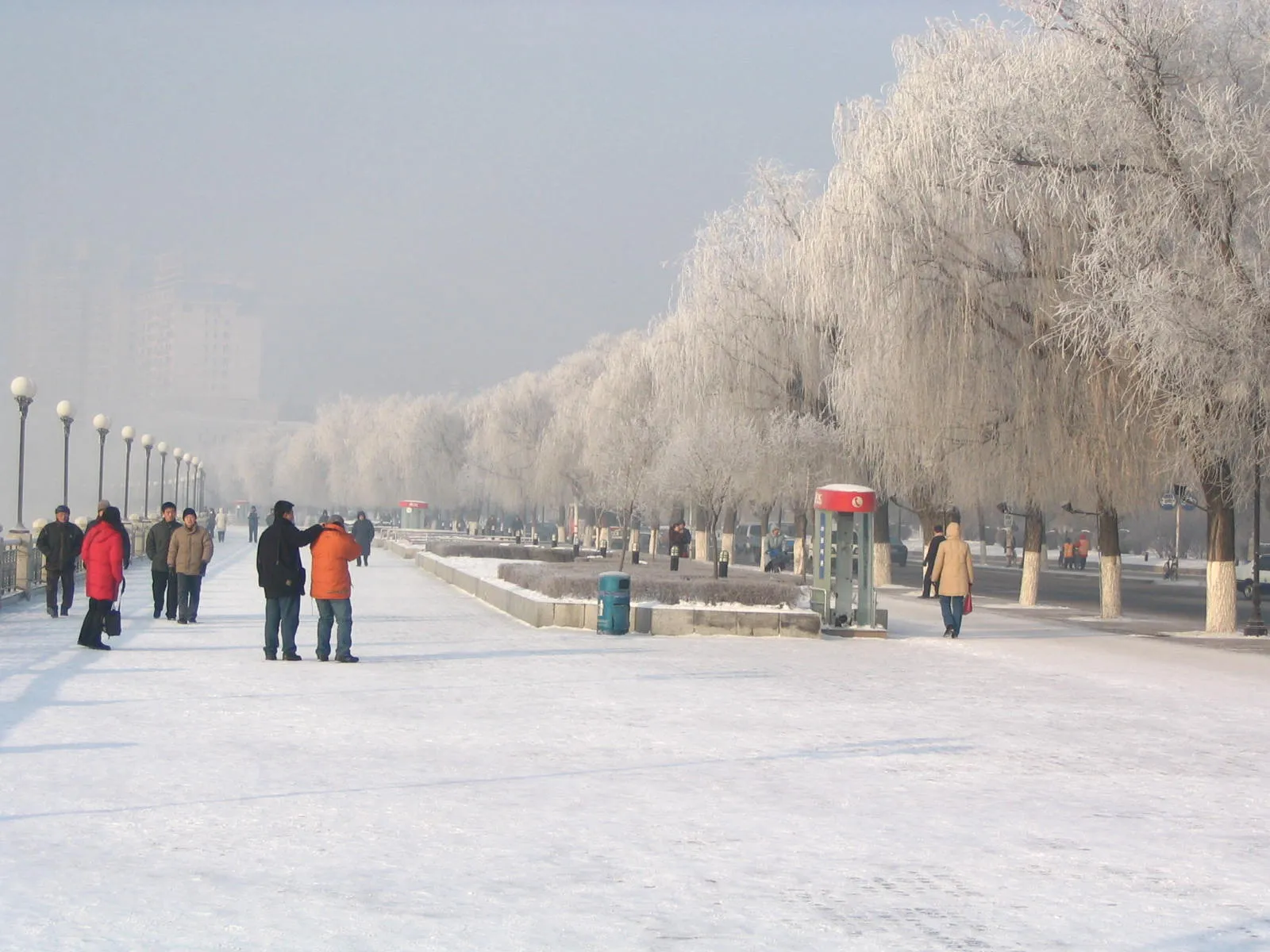
Jilin’s rime ice is China’s most reliable winter spectacle, and the best window is late December through January, with January the peak month. Plan for two or three mornings, read the city’s daily star-rated morning report before you go, and be on the riverbank by 6 AM. The season’s big set piece, the 32nd Jilin Rime Ice and Snow Festival, opens November 28, 2026.
Rime ice in 30 seconds
- What: River mist freezing onto branches overnight, turning whole riversides into crystal, counted among China’s Four Natural Wonders.
- When: December to February; late December through January is the best window, January the peak. Be on the riverbank by 6 AM and plan to leave by 9 AM: the ice falls once the sun climbs. Check the forecast the night before: thick fog around 10 PM is your green light for the next morning. Allow 2–3 mornings in Jilin; a single morning can still miss if the night was clear or windy.
- Where: Rime Island (Wusong Island) for the full spectacle; Hantun and Zengtongtun villages for the best photos; Ashihada for easy access and the highest frequency of rime days; the downtown riverbank if you’re short on time.
- How cold: Often −20°C or below at sunrise. This is not a “light jacket” situation.
- Tickets: Rime Island admission is typically under 100 RMB; confirm on the day, as winter pricing moves.
- The forecast: The city publishes a daily star-rated rime morning report each winter morning. Read it before you decide where to go.
Month by month: your odds
| Month | What to expect |
|---|---|
| November | The season opens, but thin. The first rime mornings of the 2026-27 winter arrived on November 2 and 8, and local reports were clear they were not yet the thick, top-grade rime. Treat November as a bonus. |
| December | The season builds through the month. Early December is still hit-and-miss; from late December the cold settles and the odds climb steeply. |
| January | Peak. The most reliable month, the thickest rime, and the easiest month for five-star mornings. If you can pick one month, pick January. |
| February | Still good through mid-to-late February, then the season tapers as the cold loosens. The morning report runs into mid-February. |
What rime ice is, and why Jilin gets it every year
Rime (雾凇, wusong) forms when supercooled water droplets in fog freeze on contact with branches, building delicate white filigrees that glitter in the sun. Elsewhere it’s a freak weather event. In Jilin it’s an annual one, thanks to a quirk of engineering: the Songhua River is warmed by the Fengman hydropower station upstream, so it doesn’t freeze in winter. Open water all winter means endless vapor; vapor plus −20°C nights means rime, reliably, for weeks on end. Harbin builds its ice city by hand; Jilin’s rime grows itself overnight on the river’s breath.
Locals experience it in three phases: night fog on the river (thick fog around 10 PM predicts a great next morning), morning rime coating every tree, and rime fall before noon, when the crystals drop like snow in the sunshine.
Read the stars: the daily rime morning report
Guessing is the old way. Jilin now runs a dedicated rime forecast system covering 11 viewing belts and 17 monitoring points, built on temperature, humidity, wind, and Songhua River water temperature readings. Each winter, for about 100 days from mid-to-late November to mid-February, the city publishes a daily rime morning report (雾凇晨报) on its official tourism WeChat account. For the 2026-27 season the report resumes on November 20, published before 6:30 AM and covering 11 viewing points; the account to follow is “吉林市行”.
Each point gets a star rating, one to five stars. The working rule: three stars and above is worth going out for; below three, wait for the next morning. Use the rating to pick your spot, not just your day:
- Four or five stars at Rime Island: go. The island costs half a day and a ticket, and its five-star mornings are the rarest of all, sometimes ten days to a fortnight apart. A four or five star forecast is the moment to spend the effort.
- Three stars: stay in town. Ashihada has the highest frequency of rime days in the city, it is free, and bus 33 gets you there from downtown. The downtown riverbank is the other easy call.
- Below three stars: skip the dawn alarm. Sleep in, and try the next morning.
One timing wrinkle matters. The island needs a 5:30 AM departure, before the morning report is out, so the island decision is made on the previous evening’s forecast; the morning report is what decides the in-town choice. Check the evening forecast the night before you plan an island dawn.
When to go
| Detail | |
|---|---|
| Season | December–February; late December to January is the best window, January the peak |
| Time of day | 6:00–9:00 AM. After ~9 AM the ice starts falling |
| Best conditions | A foggy night followed by a clear, bitterly cold morning; a three star or better forecast |
| Worst conditions | Windy days (rime won’t settle), or arriving at noon |
| How many mornings | 2–3 mornings; a single morning can miss if the night was clear or windy |
Check the overnight forecast, not just the daytime one. A foggy evening is your green light.
Where to see it, ranked
1. Rime Island (Wusong Island, 雾凇岛). The headline act: a river-encircled island in Wulajie Manchu Town, about 40 km (1 hour) north of downtown. The weeping willows along its banks wear the thickest rime in the region. Hantun Village on the island is praised as the “first village of rime wonderland” and the top photography spot; Zengtongtun Village on the north side is quieter, with a good west-facing bank for sunrise and sunset shots.
2. Ashihada (阿什哈达). The photographers’ favorite: convenient transport from the city and a high frequency of rime days. Walk upstream along the river for a panorama of frosted trees in neat rows. It is free, and bus 33 runs there from downtown.
3. Downtown riverbank (Songjiang Middle Road). Zero travel time: on a good morning the riverside promenade in the city center is coated too. The best option if you only have one free morning.
4. Songhua Lake & Beidahu. Secondary spots worth combining with a ski or lake day, but don’t make them your primary rime plan.
How to get to Rime Island
- Bus + ferry (cheapest): From Chaluxiang Bus Station near Jilin Railway Station, take a bus to Wulajie Town, then a short ferry to the island. Budget roughly 60 RMB round-trip for the transfer legs; the island ticket itself is typically under 100 RMB.
- Taxi / Didi (simplest): Round-trip from downtown with waiting time runs roughly 280–350 RMB. Split between 3–4 people it’s very reasonable. And you control the 6 AM departure.
- Day tours: Local agencies run rime photography tours from the city in season; useful if you want a guide who knows which bank frosted best overnight.
Critical: leave downtown by 5:30 AM at the latest. Arriving at 9:30 AM means arriving at bare branches.
Tickets and costs
Prices shift by season; treat these as rough guides, not gospel: island admission is typically under 100 RMB, and the whole day-trip (transport + ticket + a hot lunch in Wulajie) lands well under 300 RMB per person. Confirm current prices locally; winter-season pricing moves.
What to wear and bring
- Clothing: thermal base layer, fleece mid-layer, heavy windproof outer shell; insulated boots with grip; warm hat covering ears; insulated gloves; a windproof face mask. At −20°C before sunrise, exposed skin hurts fast.
- Camera: batteries drain alarmingly fast in extreme cold. Carry spares inside your coat, close to your body. A tripod is worth the weight; backlit shots (shooting toward the low sun through the ice) are the money shots. Keep lens changes quick to avoid condensation. Our photography guide has the full cold-weather camera playbook.
- Phone: keep it in an inside pocket; touchscreens get sluggish in the cold.
The full head-to-toe checklist (layers, boots, heat packs, and what to buy cheaply on arrival) is in our Jilin winter packing list.
Should you stay overnight?
If rime is the whole point of your trip, stay a night in a Hantun Village farmyard. You’ll sleep on a heated kang bed, eat farmhouse food (stewed chicken with mushrooms is the classic), and wake up already on the island for the 6 AM light instead of racing from downtown. Villagers are famously hospitable, though don’t expect English. Our Rime Island guide compares Hantun and Zengtongtun in detail.
Combine it with Manchu culture
Rime Island sits in Wulajie Manchu Town. Between rime viewings, visit the Wula history and culture museum, walk the old Manchu street, and eat the local Manchu hotpot: copper pot, pickled cabbage, blood sausage. It turns a photo trip into a cultural one.