Getting Around Jilin City: Buses, Taxis, and the River-Shaped Map
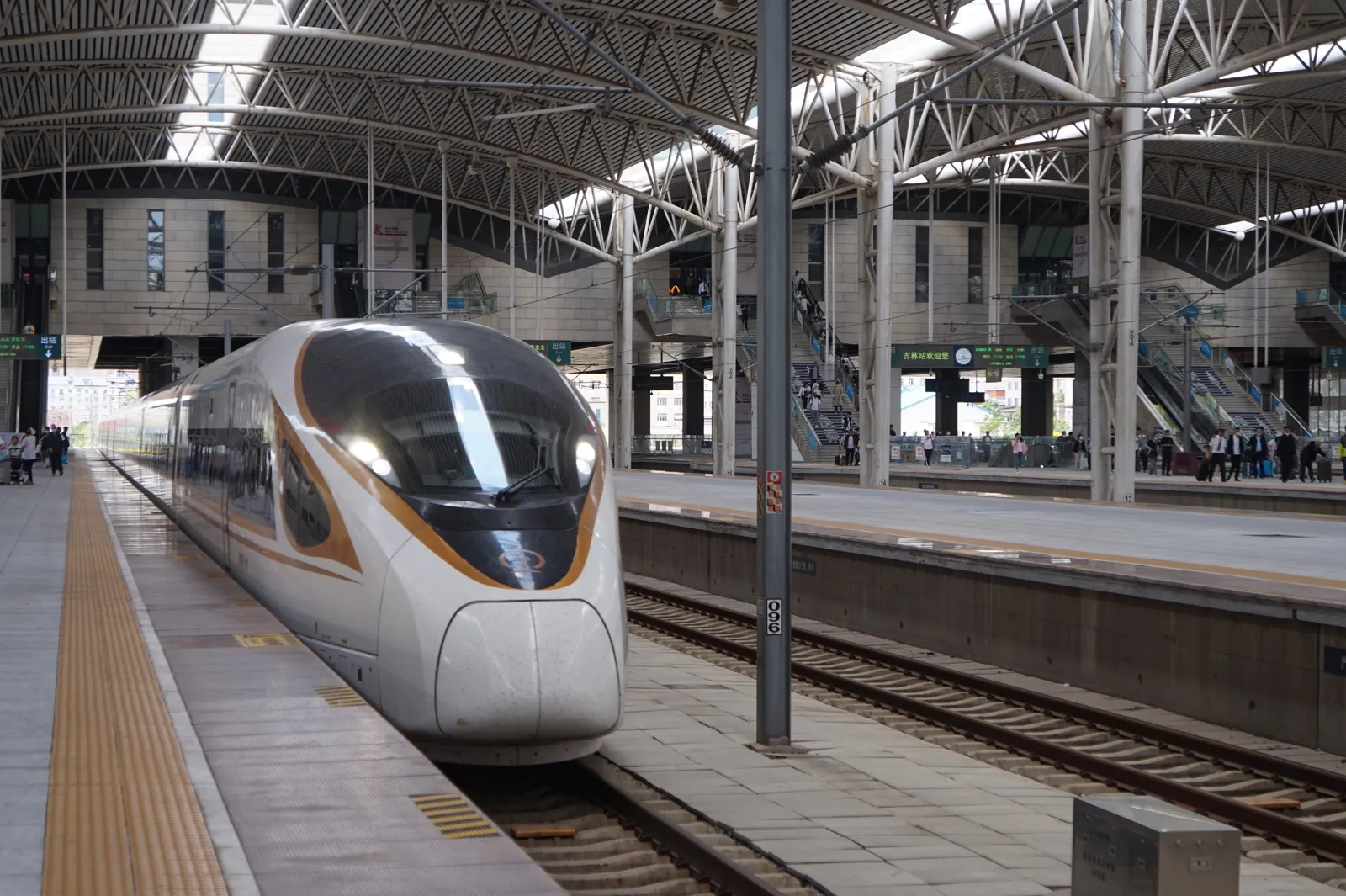
Getting around Jilin in 30 seconds
- The city follows the river. The Songhua makes a big bend through Jilin, and the urban core sits inside it. If you know which side of the river you’re on, you know roughly where you are.
- Buses go everywhere and cost almost nothing. Fares are typically 1–2 yuan. Routes are numbered and stop names are announced in Mandarin. Have small change or a transit app ready.
- Taxis and DiDi fill the gaps. Taxis are metered and plentiful outside rush hour. DiDi (China’s Uber) works with a foreign phone number and an international card in most cases.
- No subway. Jilin City has no metro system. The bus network plus taxis covers everything a visitor needs.
- Winter changes the math. Icy roads slow everything down from November to March. Allow extra time, and prefer the bus or a car over walking long distances in January.
The big picture
Jilin is a mid-sized Chinese city stretched along the Songhua River, and its transport reflects that shape: linear, river-bound, and easy to read once you internalize the bend. The downtown core — the shopping streets, the old churches, the riverfront promenade — clusters on one stretch. The rime ice viewing areas sit upriver. Beidahu ski resort is out of town entirely and needs its own plan (our ski guide covers that).
For a visitor, the practical question is never “how do I cross the city” but “how do I get from my hotel to the riverfront, the bus station, or the train station.” The answer is almost always: bus for the trunk routes, taxi or DiDi for everything else.
Buses: the workhorse
The bus network is dense, cheap, and — if you don’t read Chinese — mildly adventurous. Here’s how to use it without stress:
Paying. Most city buses take coins (1–2 yuan) or a transit QR code. The QR option usually lives inside Alipay’s transport mini-program, which is worth setting up before you arrive — it also works in most other Chinese cities. If all else fails, a pocketful of 1-yuan coins solves everything.
Reading the system. Bus stops have route maps, and buses announce stops in Mandarin. The single most useful skill is recognizing your destination’s Chinese characters — screenshot them from your hotel booking or a map app and match shapes. You don’t need to read the language; you need to match the pattern.
What to expect. Buses run frequently on main corridors (every few minutes at peak) and less often on the edges. They’re heated in winter, which matters more than it sounds when it’s minus 20 outside. Keep your phone charged — you’ll be checking the map.
The cousin you already know: if you’ve ridden buses in any second-tier European city — say, Kraków or Porto — the logic is identical. Numbered routes, fixed stops, cheap fares, the occasional mystery detour. The difference is the payment layer (QR codes and coins instead of contactless cards) and the language on the announcements.
Taxis and DiDi
Taxis in Jilin are metered, and the starting fare is low by international standards. Flag one down on the street, show the driver your destination in Chinese characters (your hotel’s card, a screenshot, the DiDi app), and you’re set. Drivers rarely speak English; the character screenshot is the universal protocol.
DiDi is the smoother option if your phone setup allows it. The app has an English interface, takes international cards, and shows the price upfront — no negotiation, no meter anxiety. In a city the size of Jilin, wait times are usually under five minutes in the urban core.
The winter caveat. When the roads ice over, taxi supply tightens and DiDi surge pricing appears. This is normal. Build buffer time into winter itineraries, especially for early-morning departures like rime ice viewing (our rime ice guide explains the dawn timing).
The river as compass
Here’s the local trick: the Songhua’s bend means “north of the river” and “south of the river” are more useful than street names when you’re orienting yourself. The main commercial streets run roughly parallel to the water. If you’re lost, walk toward the river — you’ll hit the promenade, and from there the city’s layout starts making sense.
This matters because Jilin’s street grid isn’t the neat north-south lattice of a planned capital. It grew along the water. Thinking in river terms — upriver, downriver, across the bridge — matches how locals give directions, and it will make taxi conversations (via your screenshot) go smoother.
Walking
The downtown core is walkable in good weather. The riverfront promenade is the city’s best free attraction and genuinely pleasant from late spring through early autumn. Distances between the main sights are manageable on foot if the temperature cooperates.
In winter, recalibrate. Minus 20 degrees with wind off the river is not walking weather for long stretches. Locals don’t do it either — they bus, taxi, or drive. Follow their lead.
Practical checklist
- Before arrival: install Alipay and set up the transport QR; download an offline map; screenshot your hotel name and address in Chinese characters.
- Daily carry: 1-yuan coins as backup; a charged phone; your destination in characters.
- Winter add-on: allow 50% more travel time than the map suggests; prefer heated transport; don’t plan tight connections on icy days.
- Leaving town: the train station and long-distance bus station are the two hubs. Our getting-to-Jilin guide covers the intercity side — high-speed rail to Changchun, Shenyang, Harbin, and Beijing.
Jilin rewards the visitor who moves like a local: bus for the routine, taxi for the exception, river for orientation. It’s not a city that requires transport heroics. It requires a warm coat and a screenshot.