Jilin City Beishan Park Guide: Temples, Two Peaks, and the City View
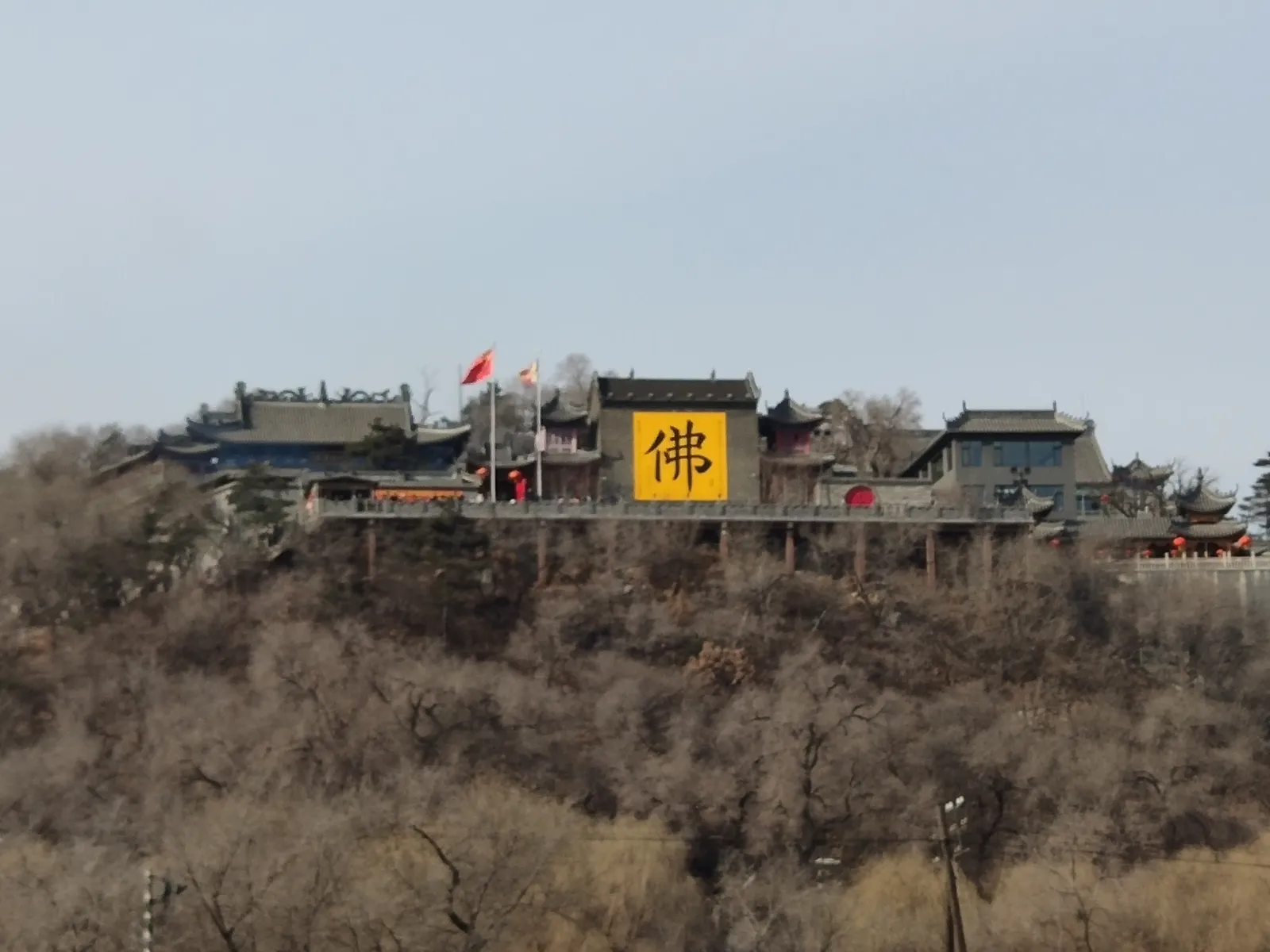
Beishan Park is the hill at the back of Jilin City, and it is the easiest half day in town. Founded in 1924 and free to enter since 2011, it packs Qing dynasty temples, two peaks, a 1935 granite bridge, and the best view over the city into a single climb of 269.8 metres. Allow 2 to 3 hours, come in the daytime, and pair it with the riverfront for a full day out.
At a glance
- Place: Beishan Park, also called Beishan Scenic Area, Chuanying District, Jilin City
- Address: No. 51 Desheng Road, about 4 kilometres from the railway station
- Founded: 1924, as a park built around the temple cluster; national 4A level scenic area
- Highest point: West peak, 269.8 metres above sea level, about 60 metres above the city
- Tickets: Free since January 1, 2011; the four main temple halls are listed as free, with small charges possible at individual halls
- Hours: Provincial tourism page lists full day; other listings give 6 AM to 5 PM, so check the gate notice and plan a daytime visit
- Time needed: 2 to 3 hours with the temple halls, about 1 hour for a straight climb to the viewpoint
- Best time: Weekday mornings are quietest; late afternoon gives the warmest light over the city
- Watch out: Stone steps get slick in rain and ice; temple halls keep shorter hours than the park grounds
Jilin City Beishan Park in 30 seconds
- What it is: A city hill turned public park, with a temple cluster that predates the park by two centuries and a ski field on its back slope.
- Why go: It is the one place in Jilin where history, local life, and a view come together. The temples carry the story, the pavilions carry the view, and the morning crowds carry the city itself.
- What you see: Three Qing dynasty halls from 1701, 1738, and 1776, the Lanpei Bridge between two peaks, the bell tower on the west peak, and the Lanyue Pavilion on the east peak.
- What it costs: Nothing for the park itself. Bring small cash in case a hall asks for an incense or entry donation.
- Pair it with: The 1 day itinerary puts Beishan in the afternoon, after the city museum and before the riverfront at dusk.
Why this hill matters
Beishan means North Mountain, and the name is literal. The hill stands north of the old city, part of the Xuantianling range, and it was sacred ground long before it was a park. Local lore calls it Jiulong Mountain, the Mountain of Nine Dragons, and the provincial tourism page says the Kangxi and Qianlong emperors both climbed it during their eastern tours. Treat the dragon story as legend. The emperors left a harder trace: the Qianlong Emperor brushed the plaque that still hangs in Guandi Temple during his 1754 tour.
The temples came first, starting in the 16th century and building up through the Qing dynasty. The park came second, laid out around them in 1924, and the two uses still share the same steps. Monks and retirees use the hill in the morning, sightseers use it in the afternoon, and both groups pass each other on the same stone stairs.
If you know London, think of Hampstead Heath. Both are the local hill where residents walk every day, and both give a city its breathing room. The difference is what sits on top. Hampstead is open heath with a view. Beishan is a temple garden with fairs, incense, and a ski slope, and the view comes with 300 years of buildings in the foreground.
The climb, in order
Start at the main gate on Desheng Road and climb the stone steps in hall order, oldest first. The route is simple, and the hill is small enough that you cannot get properly lost.
Guandi Temple, 1701. The oldest building on the hill, dedicated to Guan Yu, the third century general turned god of loyalty. The Qianlong plaque reading Ling Zhu You Qi hangs in the main hall. The hall also shelters Guanyin and Weituo, because this hill adds gods rather than choosing between them.
Yaowang Temple, 1738. The Medicine King Temple, dedicated to the legendary Three Sovereigns, the Tang dynasty physician Sun Simiao, and famous doctors through the ages. Locals come here to pray for health. Its basement hosted secret meetings during Kim Il Sung’s years of activity in Jilin, and later became a small site of China Korea friendship education.
Jade Emperor Pavilion, 1776. The largest temple in the complex, dedicated to the Jade Emperor, the supreme god of the Taoist pantheon. It was substantially rebuilt in 1926 and repaired again in the 1980s. Two pagodas once stood behind it and did not survive the Cultural Revolution.
Around them sit the smaller pieces: Kanli Palace from 1908, honouring the sun god and the fox immortal; Zhiguang Temple from 1919, rebuilt in 1995; and Guangji Temple from 1922, moved to the Beishan area in 1994. The full temple story, with the fair calendar and the 1987 provincial protection listing, is in the Beishan temples guide.
Lanpei Bridge. Cross the valley between the two peaks on this granite arch bridge, rebuilt in 1935. It sits at 265 metres above sea level, almost at the height of the west peak itself, and local legend credits the last emperor Puyi with its name. Stand in the middle and look down. The drop is the reason the bridge exists, and the reason the two peaks feel like separate hills.
West peak, 269.8 metres. The summit holds the Kuang Guan Ting, better known as the Ping’an Bell Tower. The first version was a single storey wooden structure built in 1913. The present version dates from a 1964 rebuild as a two storey hexagonal pavilion. This is the main viewpoint. The city spreads out below, the Songhua River bends past it, and on a clear winter day the haze lifts enough to see the shape of the whole town.
East peak. A short walk across the bridge brings you to the Lanyue Pavilion, built in 1976, which looks back across the valley toward the bell tower. Smaller pavilions dot the slopes around both peaks, including Yuejin, Taoyuan, and Jiangshan pavilions. If the west peak is the postcard, the east peak is the quieter seat. Sit here if the bell tower is crowded.
Down the other side. The east side of the hill was rebuilt as People’s Square in 2010, and the fence between square and park was opened so the two run together. Walking down toward the square ends the climb in open civic space rather than a back gate, and it is the natural way to leave the hill toward the city centre.
Beyond the temples
Two parts of the hill surprise first time visitors, and both sit away from the temple route.
The ski slope. The back slope was laid out as a ski field in the Manchukuo period, which makes it the first ski field in mainland China. It was left idle during the Cultural Revolution, reopened in 1991, and rebuilt in 1998 as the Beishan Ice and Snow World, covering 10 hectares. The scenic area describes it as mainland China’s only ski field sitting inside a city. Beside it, the old air raid shelters under the hill were converted into a four season cross country ski venue that opened in January 2019, with an indoor track of 1,308 metres. It was the world’s fourth and Asia’s first all weather standard cross country training venue, and it became a national training base at the end of 2019. The training venue serves athletes first, so check on the day whether public sessions are running before you plan a ski visit.
The martyrs memorial. On a ridge behind the hill stands a granite memorial tower built in 1956, 29.6 metres tall, with a five star lamp on top. Beside it to the east lies the revolutionary martyrs cemetery, covering 10,500 square metres, with a memorial hall built in 1993. It is a solemn corner of the park, and a reminder that this hill belongs to the city’s modern history as well as its temple history. Walk through quietly and keep voices down.
Fairs, not just buildings
The temples are only half the reason to come. The calendar runs on the lunar month: the 8th day of the fourth month for Buddha’s birthday, the 18th for the Niangniang goddess fair, and the 28th for the Medicine King and Guandi fairs together, the biggest of the three. The park has also run a Spring Festival fair every year since 1999. In 2011 the Beishan temple fair was listed as national intangible cultural heritage, which puts the incense smoke and the snack stalls on the same official register as the buildings.
Come on a fair day and the hill stops being a museum. Come on an ordinary weekday and it becomes something else: retirees practicing tai chi and sword forms in the courtyards, incense vendors at the stone steps, chess games under the pines, and the city spreading out below the west peak.
Three ways to walk it
The temple climb, 2 to 3 hours. Gate to Guandi, Yaowang, and Jade Emperor halls, across the Lanpei Bridge, up to the west peak bell tower, and down the east side to People’s Square. This is the standard visit, and the one this guide describes in order.
The quick viewpoint, about 1 hour. Skip the hall interiors and climb straight for the west peak. The steps are the workout, the bell tower is the reward, and the east peak is optional if time is short.
The local morning, 1 to 2 hours. Arrive early, climb slowly, and follow the retirees. Watch the tai chi in the courtyards, listen for the morning exercise music, and take the east peak seat while the city wakes up. This is the closest the park comes to showing you Jilin rather than showing you a sight.
Practical notes
- Getting there: Take bus 7 or 107 to Beishan station, or bus 8 to Desheng Gate. Buses 1 and 101 stop at Shuimendong, and buses 42, 59, 45, and 46 also serve the area. The park is about 4 kilometres from the railway station, roughly a 15 minute drive, and a short taxi ride from the riverfront.
- Tickets and hours: The park itself is free, and the provincial tourism page lists the four main halls as free too. Some listings and older reviews mention small charges of 5 to 10 RMB at individual halls, so treat the gate notice as final. Hours are unsettled between sources, with the provincial page listing full day and other listings giving 6 AM to 5 PM. Go in the daytime and check the notice at the gate.
- The steps: Stone steps all the way up, with handrails in the steepest stretches. They get slick in rain and ice. In winter, wear the boots from the winter packing list and hold the rail on the way down. Icy steps injure more visitors than the cold does.
- Etiquette: The temples are active places of worship. Keep a quiet voice, no flash where worshippers are praying, and follow posted rules. Buying a stick of incense from the step vendors and offering it is normal and welcomed.
- Photography: The best frames are the temple roofs against the city from the west peak, and the bell tower from the east peak across the valley. For the full photography plan, including the dusk light, see the photography guide.
- Winter: The hill is at its most beautiful with snow, and its most slippery. Go at midday, dress for minus 20 degrees, and do not plan a night climb. The park grounds stay open late, but the temple halls close earlier and the steps are unlit in places.
- Safety note: In June 2024, four visiting American instructors were stabbed in the park by a lone attacker, who was arrested. It was treated as an isolated incident, but it is worth knowing. Keep the normal awareness you would keep in any busy public park.
- Fair days: Spectacular and crowded. If crowds are not your thing, pick a weekday morning instead, and check the lunar date before you go, since the fair dates shift every year.
Combine it with a day in Jilin
Beishan works best as the middle of a day, not the whole of one. Start at the city museum in the morning, climb Beishan in the afternoon, and finish on the riverfront at dusk, as set out in the 1 day itinerary. The 2 day itinerary and the things to do list show the same pairing in a longer stay.
For the wider story, read the history timeline before you go. The temple dates of 1701, 1738, and 1776 sit inside a longer arc that runs from the fall of the Ula capital in 1613 to the opening of the Arsenal in 1882. The Confucian Temple across town gives the other half of the religious story: the state’s formal Confucianism in the morning, the people’s crowded pantheon on the hill in the afternoon.
Part of our Travel Guides series. For the temple history in full, see the Beishan Park Temples guide.