Jilin City 1-Day Itinerary: Museum, Beishan Hill, Riverside, and Night Market in One Day
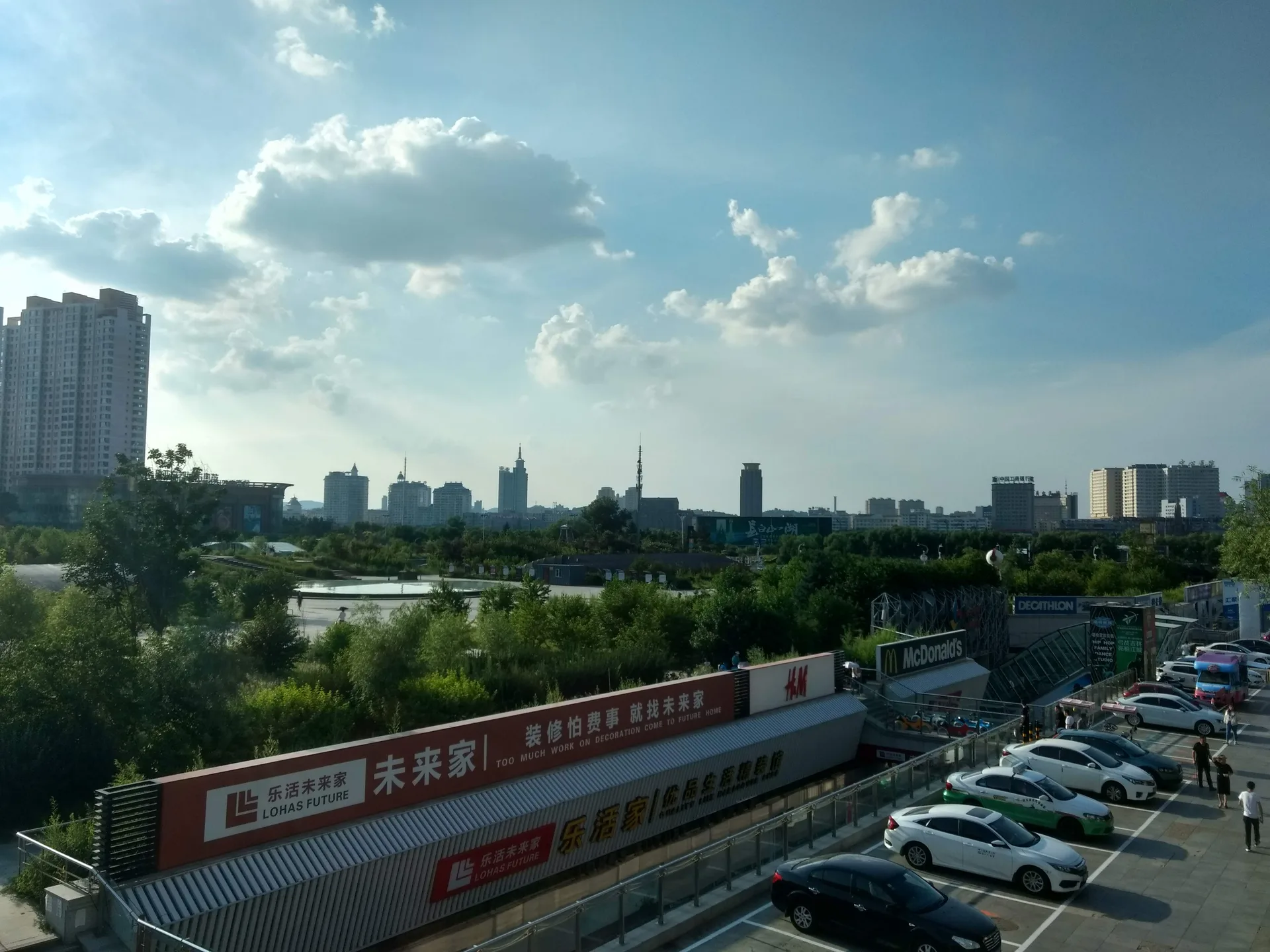
One day in Jilin City is enough for the city itself, and not enough for the region around it. This plan gives you a museum morning, a hill park afternoon, a riverside walk at dusk, and a night market dinner, all inside the city centre. It leaves out Rime Island, Songhua Lake, and Changbai Mountain on purpose, since each of those needs its own day.
At a glance
- Place: Jilin City, Jilin Province, Northeast China, on the Songhua River
- Duration: One full day, from a 9 AM museum start to a night market dinner
- Base: A city centre hotel, within walking reach of the riverfront
- Tickets: General admission to Jilin City Museum is free. Beishan Park entry has been free since 2011. The riverside walk and Century Square are open public space
- Best season: Any season, with December to February for winter rime mornings and warm months for the Century Square fountain show
- Watch out: Jilin City Museum closes on Mondays except national holidays. Night market and snack street locations shift with season and enforcement, so ask your hotel for the current spot
- Getting around: On foot plus taxi or Didi. See the transport guide
Jilin City 1-day itinerary in 30 seconds
- Morning, 9 AM to 11 AM: Jilin City Museum at No. 100 Jilin Avenue, by Century Square. Free entry, closed Mondays. Allow 2 hours for the meteorite hall and the 5,000 year history hall.
- Midday: A snack street lunch near downtown. Start with jianfen, the pan fried starch jelly that is Jilin’s sidewalk signature, then graze.
- Afternoon, 2 to 3 hours: Beishan Park temples on one hill in Chuanying District. Three halls carry the visit: Guandi Temple dated 1701, Medicine King Temple dated 1738, and Jade Emperor Pavilion dated 1776.
- Dusk, 1 to 2 hours: The riverside walk along Songjiang Middle Road, from Linjiangmen Bridge toward Jilin Bridge, ending at Century Square.
- Evening: Dinner at a night market. The night markets guide and the street food guide cover what to order.
- Pace rule: One major site per half day, plus the walk and the dinner. A one day plan that tries to add the lake or the mountain will fail on travel time alone.
How this day differs from the 2 day and 7 day plans
The 2 day itinerary splits the trip into a city day and a spectacle day, with Rime Island at dawn in winter or Beishan Park and Songhua Lake in other seasons. The 7 day itinerary adds a full lake day, a Wulajie town day, and an overnight Changbai Mountain finish. This one day plan is the city day alone, tightened to a single arc: objects in the morning, a hill in the afternoon, water at dusk, food at night.
If you have only one day, do not try to squeeze Rime Island into it. The island trip needs a 5:30 AM departure and about an hour each way, and it would eat the museum and the hill together. Save the island for a second day, or for a winter trip built around it. The things to do list helps you choose what to add if a second day opens up.
Think of the day the way a walking day works in a small European river city, with a museum, a hill, and an evening promenade. The comparison holds for pace and scale: a walkable centre, one river running through everything, and dinner at a market rather than a formal restaurant. The difference is what fills the stops. Few European river cities pair a 1,770 kg meteorite with a hill where Taoist, Buddhist, and folk shrines share one slope, and few end the day with skewers eaten standing up at a plastic stool.
Morning: Jilin City Museum, 9 AM to 11 AM
Start at the Jilin City Museum at No. 100 Jilin Avenue, by Century Square on the south bank of the Songhua River. General admission is free, hours are 9 AM to 4:30 PM, and the museum closes on Mondays except national holidays. Arrive at opening if you can, since this plan needs the morning for the museum and the afternoon for the hill.
Two permanent exhibitions carry the visit. The meteorite hall covers 2,060 square metres and is built around the March 8, 1976 shower, when a meteorite shower fell across about 500 square kilometres around Jilin City and Yongji County. Its centrepiece is Jilin No. 1, at 1,770 kg the largest single stony meteorite ever found. The history hall traces local development from the Neolithic Age to 1673, the year Wula City was founded in the Qing Dynasty, with most archaeological pieces from the Xituanshan Culture and most handed down relics as Manchu pieces from the Qing Dynasty.
Allow 2 hours for both halls. If time runs short, see the meteorite hall first, since it is the one exhibition in China devoted entirely to meteorites, and it is the reason most visitors come to this address. A third hall, on the Niu Zihou and Peking Opera story, is worth the extra half hour if the morning runs ahead of schedule. Photography rules vary by hall, so follow the signs in each room.
Practical note for the morning: the museum sits beside Century Square, where this day ends. That pairing is useful twice. It gives you a landmark you already know when you return at dusk, and it means the morning and the evening share one easy taxi or bus stop. See the transport guide for bus and taxi basics.
Midday: a snack street lunch
Walk or take a short taxi ride toward downtown for lunch, and eat the way locals eat at midday: standing up, pointing, and grazing. Start with jianfen, starch jelly sliced and pan fried crisp, tossed with chili oil, vinegar, and savoury sauce. It is the one item on the street food list with no Western equivalent, and the street food guide calls it the taste most tied to this specific city.
After jianfen, graze by appetite: grilled skewers, cold noodles in summer, a steamed bun or a stuffed pie if you are in a hurry. A full grazing lunch rarely breaks 30 RMB in the existing street food guide, so this is the cheapest meal of the day. Ordering needs no Chinese beyond pointing, holding up fingers for quantity, and the word zhege, meaning this one, said while pointing. Pay by phone where possible and carry some yuan as backup.
One honest caveat belongs here. Snack streets shift with season and enforcement, so this guide does not name one fixed street as the lunch stop. Ask your hotel front desk for the current snack street, or follow the downtown and station quarter streets in the neighbourhoods guide. The rule that never fails is turnover: eat where locals queue and the food is cooked in front of you.
Afternoon: Beishan Park temples, 2 to 3 hours
Give the afternoon to Beishan Park temples, the temple cluster on one hill in Chuanying District, an easy city bus or taxi ride from the riverfront. Park entry has been free since January 1, 2011. Allow 2 to 3 hours at an easy pace if you enter the temple halls.
Climb the stone steps in hall order, oldest first. Guandi Temple, dated 1701, is the oldest building on the hill, dedicated to Guan Yu, the third century general turned god of loyalty. Its main hall still hangs a plaque brushed by the Qianlong Emperor during his eastern tour in 1754. Medicine King Temple, dated 1738, is dedicated to the Medicine King tradition, including Sun Simiao, the Tang dynasty physician still called the King of Medicine, and locals come here to pray for health. Jade Emperor Pavilion, dated 1776, is the largest temple in the complex, dedicated to the Jade Emperor, the supreme god of the Taoist pantheon, and it was substantially rebuilt in 1926 and repaired again in the 1980s.
The point of the hill is the mixture, not any single hall. Taoist halls, Buddhist nunneries, and folk shrines share the same slope, and the same visitor burns incense to several gods in a single morning and sees no contradiction. The temples are active places of worship, so keep a quiet voice, skip flash where worshippers are praying, and follow posted rules. The hilltop pavilions give the best city views, and the climb itself is the afternoon exercise after a museum morning indoors.
If the afternoon runs long, cut a smaller hall, not the climb. The three dated halls above are the core, and the smaller shrines around them are the bonus. Fair days, on the 8th, 18th, and 28th days of the fourth lunar month plus the Spring Festival fair each year since 1999, are spectacular and crowded, so pick a weekday afternoon if crowds are not your thing.
Dusk: the Songhua riverside walk, 1 to 2 hours
Return to the river for dusk, and walk the free promenade along Songjiang Middle Road from Linjiangmen Bridge toward Jilin Bridge. The full riverside walk guide covers the route. For this one day plan, the walk does two jobs: it shows you the shape of the city in one hour, and it carries you back to Century Square, where the morning began.
Linjiangmen Bridge, completed in 1994, runs 686 metres across the river on a single tower and links the Chuanying and Fengman districts. Walk east with the river on your left, past Jiangcheng Square, then past the Sacred Heart Cathedral at 3 Songjiang Middle Road near the north end of Jilin Bridge, a Gothic church built by French missionaries between 1917 and 1926. Keep walking east to Century Square, the big riverside square south of Jilin Bridge, which runs more than 900 metres from north to south and covers 22.8 hectares, with three music fountains, a flag platform, and a river viewing platform at the water edge.
In the warm months, the fountains and lights make the square the natural end of the walk. In freezing weather the fountains do not run, and the evening show becomes the lit bridges instead. In winter mornings, the same bank is a rime viewing street, when mist off the open water freezes onto the riverside trees, but this plan keeps the walk at dusk, so treat any morning rime as a bonus for a second day rather than a promise for this one. The walk is flat and paved the whole way, and any bridge crossing gives a natural turning point if your feet give out early.
Evening: night market dinner
Finish the day at a night market, and let dinner be the evening rather than a stop before it. Night markets are the evening spectacle in Jilin: grills, lanterns, and folding tables, where the night markets guide covers the after dark half of the food story. Order the way the street food guide teaches: point, hold up fingers, pay by phone.
A good first order is charcoal skewers, lamb, chicken wings, squid, mushrooms, or mantou bread over real charcoal with cumin, chili, and salt, eaten at plastic stools with the smoke in your jacket for the rest of the evening. In winter, add tanghulu, hawthorn berries in a crackling sugar shell from a cart vendor, and a roasted sweet potato to hold in both hands on the walk back. Think of the market the way a Western food hall works for grazing, with one difference that matters: here the stalls are the street itself, there is no roof, no table service, and the cold in winter is part of the meal rather than a reason to skip it.
Keep the evening loose. The market needs no ticket and no fixed start time, which is why it closes this plan so well after a day of fixed hours at the museum. If you still have energy after dinner, walk the lit bridges once more from Century Square. If you do not, head back to the hotel. A one day plan earns its rest.
Practical notes for the day
- Monday swap: If this day falls on a Monday, move the museum out and give Beishan Park a longer morning, then the riverside walk and the night market dinner as written. Check the museum notice at the door on any other day if you are coming for a specific temporary exhibition, since special shows can differ from general admission.
- Bookings to make ahead: None, for this day alone. The museum, the park, the walk, and the square are all free, and the market needs no booking. Book ahead only if you extend the trip: a Rime Island car the night before in winter, and train tickets for any Changbai leg in peak season.
- Money: Set up Alipay or WeChat Pay before arrival and carry some yuan as backup. The budget guide covers daily costs for a city stay.
- Hours and tickets: The museum hours in this plan are 9 AM to 4:30 PM, and the park has been free since 2011, but small halls may ask for small incense or entry donations, and fountain times change with season and weather. Confirm at the door or ask at your hotel on the day rather than building the evening around a posted time.
- Short on time: Cut the museum to the meteorite hall first, then a smaller Beishan hall, and never the riverside walk. The walk is the one part of the day that costs nothing, orients you, and ends at the square where dinner begins.
- Extending the trip: The 2 day itinerary adds the spectacle day, and the Jilin City travel guide holds the city overview behind this plan.