Korean Food in Jilin: Cold Noodles, Kimchi, and the Yanbian Table
The essentials in 30 seconds
- Why it is here: Jilin province is home to a large ethnic Korean community (朝鲜族, Cháoxiǎnzú), and the Yanbian Korean Autonomous Prefecture sits in the eastern part of the province. Korean food in Jilin is not an import trend. It is a local cuisine, cooked by local people, in the local style.
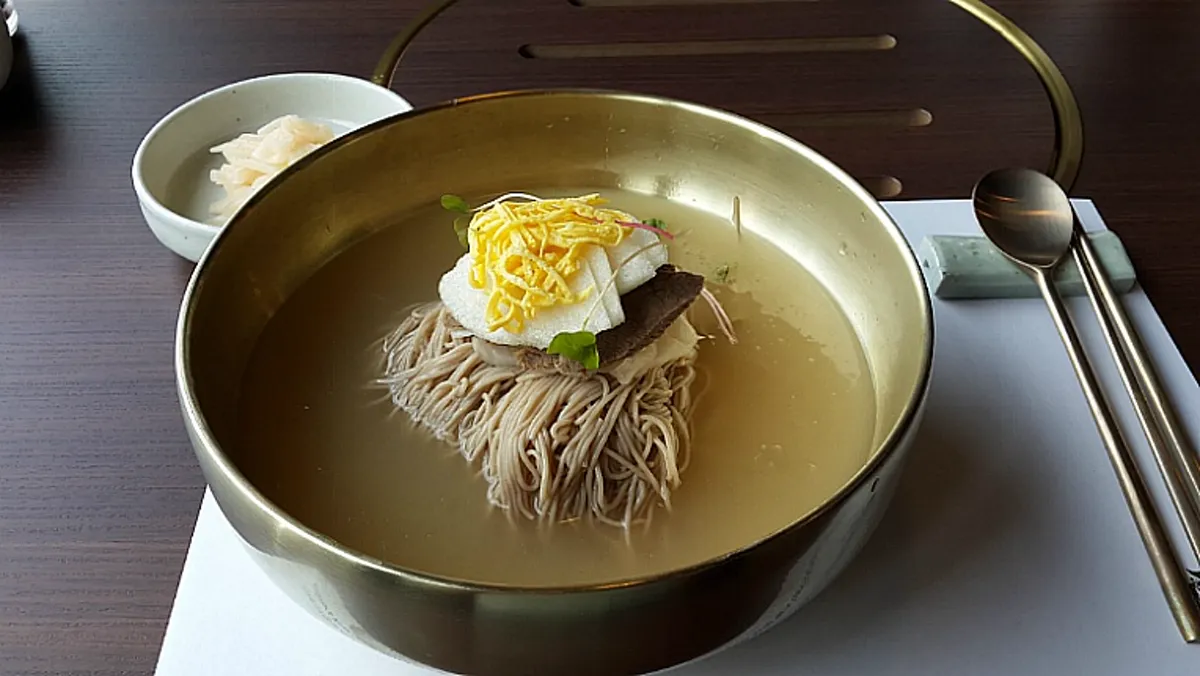
- The dish to know: 冷面 (lěngmiàn), cold noodles. Buckwheat noodles in an icy, sweet-sour beef broth, topped with egg, cucumber, and kimchi. Jilin eats it all year, including in the dead of winter.
- The supporting cast: 泡菜 (pàocài, kimchi), 烤肉 (kǎoròu, Korean BBQ), 打糕 (dǎgāo, pounded rice cakes), 米肠 (mǐcháng, blood sausage rice rolls), 参鸡汤 (cānjītāng, ginseng chicken soup).
- Cost: a bowl of cold noodles plus sides lands in the same range as any ordinary northeastern meal. See the budget guide for the full math.
Why Korean food is everywhere in Jilin
Walk any commercial street in Jilin and you will pass Korean restaurants the way other Chinese cities pass noodle shops. This is not K-pop spillover. The Korean community has lived in this region for well over a century, farming, trading, and cooking through the same brutal winters as everyone else. The food they developed here is called Yanbian style, after the autonomous prefecture to the east, and it has its own character: heartier than the Seoul originals, tuned to a landlocked winter city.
That history matters because it changes what you are eating. In Seoul, Korean food is the national cuisine. In Jilin, it is one of three answers to the same climate, alongside the Manchu hotpot and the Han pickled-cabbage table. Our food guide lays out the full picture.
The cousin you already know
If you have eaten naengmyeon in Seoul, you already know the technique: long buckwheat noodles, ice-cold broth, a boiled egg, something pickled on top. The cousin-not-twin part is the Yanbian accent. The broth here runs icier and a touch sweeter, the noodles are chewier (order scissors, more on that below), and the bowl arrives in a city where the river freezes solid for months. Seoul’s version is refined restaurant food; Jilin’s version is winter comfort food that happens to be served cold. Same family, different upbringing.
The other useful comparison is already on your table: kimchi and suan cai. Both are fermented vegetables built for winter, but they are opposite answers. Suan cai, the Han pickled cabbage at the heart of Dongbei hotpot, is salt-fermented, sour, and mild. Kimchi is chili-fermented, spicy, and loud. The northeast kept both, and a proper Jilin meal often has both on the table at once. Taste them side by side. That contrast is the whole region in two bites.
The dishes to know
Order by pointing at the menu pictures, or ask for the standard spread. The usual lineup:
- 冷面 (lěngmiàn): the headliner. Buckwheat noodles in icy beef broth, sweet and sour, with sliced egg, cucumber, pear, and a spoonful of kimchi. The noodles are famously chewy, almost rubbery. That is the point.
- 泡菜 (pàocài): kimchi, the fermented napa cabbage and radish that anchors every Korean meal. Spicy, funky, endlessly refillable in most restaurants.
- 烤肉 (kǎoròu): Korean BBQ. Thin pork belly or beef grilled at the table on a slanted pan, wrapped in lettuce with garlic, ssamjang, and rice. The social meal, built for groups.
- 打糕 (dǎgāo): pounded glutinous rice cakes, dusted with soybean powder. Chewy, mildly sweet, the Korean answer to a dessert course.
- 米肠 (mǐcháng): sundae, sausage-shaped rolls of glass noodles and pork blood in a chewy casing, sliced and served with salt. If blood sausage sounds daunting, the name on the menu tells you exactly what it is, and the regulars order it without thinking twice.
- 参鸡汤 (cānjītāng): ginseng chicken soup. A small whole chicken stuffed with glutinous rice, ginseng, and red dates, simmered into a milky broth. The winter tonic of the Korean table.
- 拌饭 (bànfàn): bibimbap, rice topped with seasoned vegetables, egg, and chili paste, mixed at the table. The safe first order if the rest of the menu looks unfamiliar.
How to eat cold noodles, in order
- Ask for scissors. The noodles are too long and too chewy to bite through cleanly. Every Korean restaurant keeps scissors for exactly this. Snip the mound a few times. Nobody will think twice.
- Season the broth. A splash of vinegar and a dab of mustard go into the icy broth. Taste as you go. The house ratio is sweet-sour; make it yours.
- Eat fast. The magic is the temperature contrast. The broth is near freezing, and it warms as you linger. This is not a dish to photograph for ten minutes.
- Chase it correctly. Regulars follow cold noodles with something hot, often a small bowl of the warm beef broth the restaurant keeps on hand, or a round of BBQ. Cold, then hot. That is the rhythm.
- Winter is not a mistake. Eating ice-cold noodles when it is minus 20 outside feels wrong the first time. Koreans have done it for generations, in heated rooms, in heavy coats, happily. Join in.
Where to find it
Korean restaurants cluster around the commercial streets and near the train station area, in every price tier from lunch-counter to full BBQ hall. Look for the signs with Korean script next to the Chinese characters; the bilingual sign is usually the tell of a Korean-run kitchen rather than a Han imitation. Lunch counters do noodles and bibimbap fast and cheap. BBQ halls are evening places, louder, built for groups.
If the topic grabs you, Yanji, the capital of the Yanbian prefecture east of Jilin, is the pilgrimage version: a whole city where Korean is on every sign and the food culture runs deeper. It is a separate trip, not a side quest. Jilin city itself gives you the cuisine at full strength.
Pronunciation guide
Tap to hear each word (AI-voiced Mandarin demo: listen and repeat):
- 冷面: cold noodles lěngmiàn
- 这个: “this one” (point at the menu) zhège
- 买单: “the bill, please” mǎidān
- 谢谢: “thank you” xièxie
Good to know
- Spice is real here. Unlike the rest of the Dongbei table, Korean food brings heat. If you have a low spice tolerance, the cold noodles and ginseng chicken soup are your safe harbors. The kimchi will find you anyway.
- Scissors are normal. Asking for them marks you as someone who has done this before, not as a tourist.
- The refill culture: kimchi and basic sides are typically refilled free. Finish them without guilt. That is how the meal works.
- No English menus outside hotels. The camera mode of a translation app plus pointing covers it. The food guide has the full ordering playbook.
- Pairs well with: the hotpot guide for the Manchu answer to winter, and street food for the Han side of the table.
FAQ
Is this the same as Korean food in Seoul? Same roots, Yanbian accent. Icy, sweeter cold noodles, heartier portions, tuned for a northeastern winter. If you know the Seoul versions, you will recognize everything and be surprised by the details.
I cannot handle spicy food. Can I still eat Korean food here? Yes. Cold noodles, ginseng chicken soup, bibimbap with the chili paste on the side, and rice cakes are all mild. Tell the table; the spice is concentrated in the kimchi and stews, which are easy to navigate around.
What is the difference between 泡菜 and 酸菜? Both are fermented cabbage for winter. 泡菜 (kimchi) is chili-fermented, spicy and pungent, the Korean tradition. 酸菜 (suan cai) is salt-fermented, sour and mild, the Han northeastern tradition. Jilin keeps both on the table.
Do I need a reservation? For BBQ halls on weekend evenings, yes. Noodle shops and lunch counters are walk-in friendly at any hour.
Start with what to eat in Jilin for the full Dongbei table, then warm up with the hotpot and street food guides.