What to Buy in Jilin: A Food Souvenir Guide
The essentials in 30 seconds
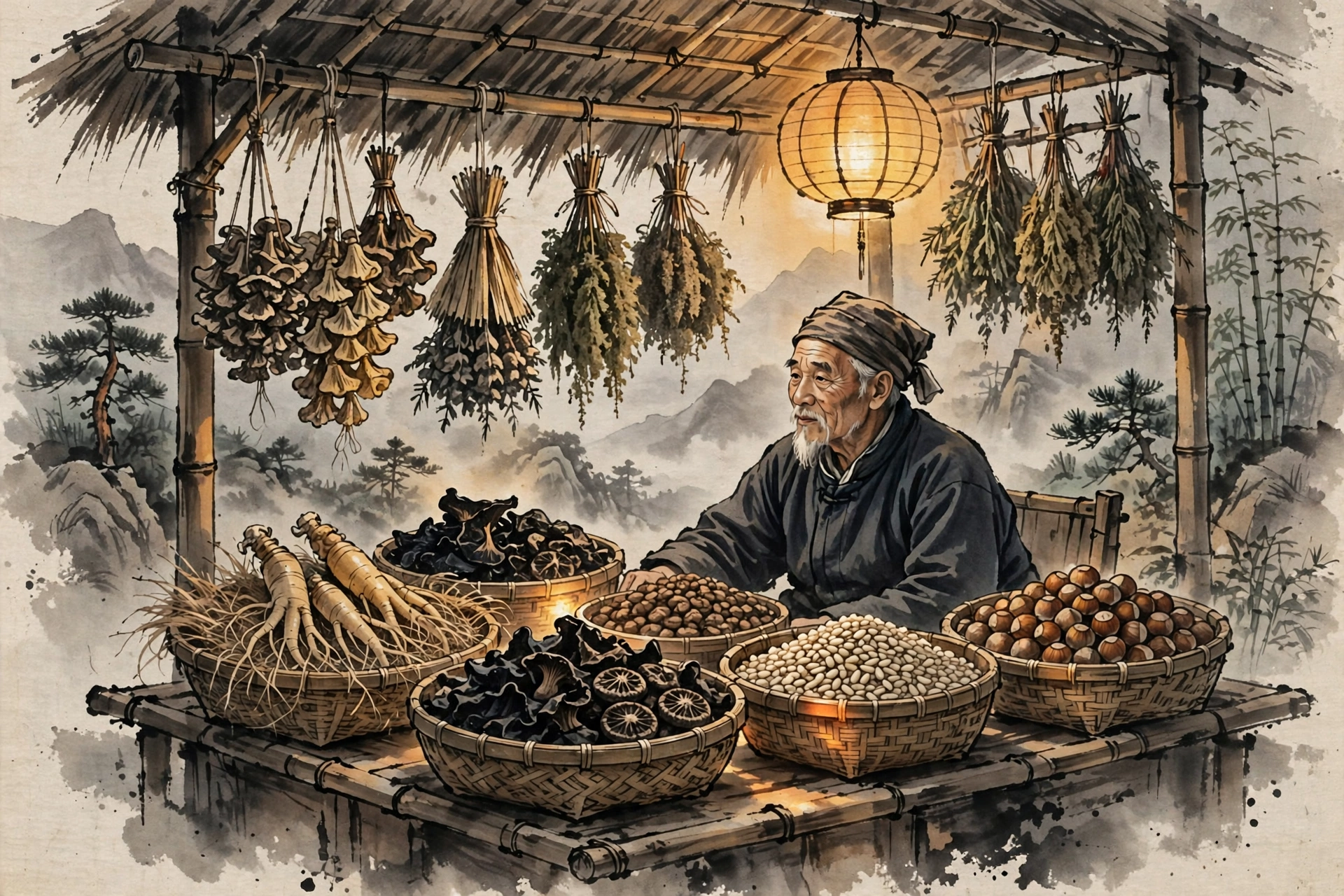
- Jilin’s souvenirs are mountain food: ginseng, black wood-ear fungus, pine nuts, and hazel mushrooms from the Changbai forests. Locals call them shan zhen (山珍), “mountain delicacies.”
- Buy at supermarkets or established specialty stores. Skip the pushy shops near tourist spots.
- Check your customs rules before you fly. Many countries restrict plant and agricultural products at the border.
- Dried goods travel well and weigh almost nothing. That is the whole trick to souvenir shopping here.
Ginseng (人参)
The big one. Changbai Mountain ginseng is called the “king of all herbs” in China, and the region around Fusong county is one of its main growing areas. You’ll see it everywhere: whole roots, sliced, powdered, in gift boxes.
Buying ginseng is a bit like buying wine. There are grades, growing years, and certification marks, and the price moves with all three. Wild roots cost serious money. Farmed roots are affordable and fine for soup or tea. Look for the “Changbai Mountain Ginseng” brand mark on packaging, which certifies origin. If a street vendor promises you wild 30-year roots at a friendly price, apply the same skepticism you’d apply to a $10 bottle labeled “vintage Bordeaux.”
For most travelers, a modest box of farmed ginseng for soup-making is the sensible buy. It keeps for ages dried, and it actually gets used.
Black wood-ear fungus (黑木耳)
The workhorse of the northeastern pantry. Dried black fungus rehydrates into something crunchy and earthy, and it shows up in cold salads, hotpots, and stir-fries across Dongbei. The Changbai-area product has a good reputation.
This is the easiest souvenir on the list: cheap, light, nearly indestructible, and genuinely useful in any kitchen. Buy the whole dried pieces, not the pre-shredded bags. A 500g bag costs little and lasts months.
Pine nuts (松子)
Northeast China is one of the world’s pine nut regions. The city of Meihekou in Jilin processes tens of thousands of tons a year, much of it from Changbai red pine cones. The nuts are buttery, rich, and nothing like the tired bag from a Western supermarket shelf.
Buy them shelled and sealed. They go rancid faster than you’d think once opened, so smaller sealed packs beat one big bag.
Hazel mushrooms (榛蘑)
The forager’s mushroom. Dried hazel mushrooms have a deep, meaty flavor that anchors the classic northeastern chicken-and-mushroom stew. If you cook, this is the souvenir that will actually change your dinners.
Dried mushrooms are also the lightest thing you can carry. A bag weighs nothing and survives any suitcase.
Where to buy (and where not to)
Supermarkets are the underrated answer. Big chains in Jilin carry properly packaged, clearly labeled mountain products at fixed prices. No haggling, no performance, no risk.
Specialty stores near markets work too, especially for ginseng where you might want advice. Pick the busy ones.
Skip the souvenir shops clustered at scenic spots and the vendors who approach you. The markup is steep and the “wild” claims are creative. The same products sit in the supermarket for less.
Before you pack: customs
This matters more than which brand to buy. Plant products, dried fungi, and roots face import restrictions in many countries, including the US, Australia, and the EU. Rules change and they are enforced. Check your home country’s customs site before you buy, not after. When in doubt, buy small quantities and keep everything sealed in original packaging.
What not to buy
- “Wild” anything at a suspicious price. Real wild ginseng costs real money. If the price seems friendly, it isn’t wild.
- Miracle tonics and deer products from pushy sellers. You can’t verify what’s in them, and neither can customs.
- Fresh anything. It won’t survive the flight. Dried is the whole point.
FAQ
How much should I budget? A solid haul (fungus, mushrooms, pine nuts, a modest ginseng box) runs a few hundred yuan. Supermarket prices are the honest baseline.
Will this stuff pass through my country’s customs? Maybe. Dried, sealed, commercially packaged plant products are usually the safest category, but rules vary by country and change often. Check before you fly.
Is ginseng tea a good gift? Yes, if the recipient actually drinks it. Ginseng tea bags are the lowest-commitment way to give the famous product without the “what do I do with a root” problem.
Eating your way through the city first? Start with what to eat in Jilin, then the night markets and breakfast guide.