Jilin Hotpot Guide: Dongbei Sour-Cabbage Hotpot, Explained
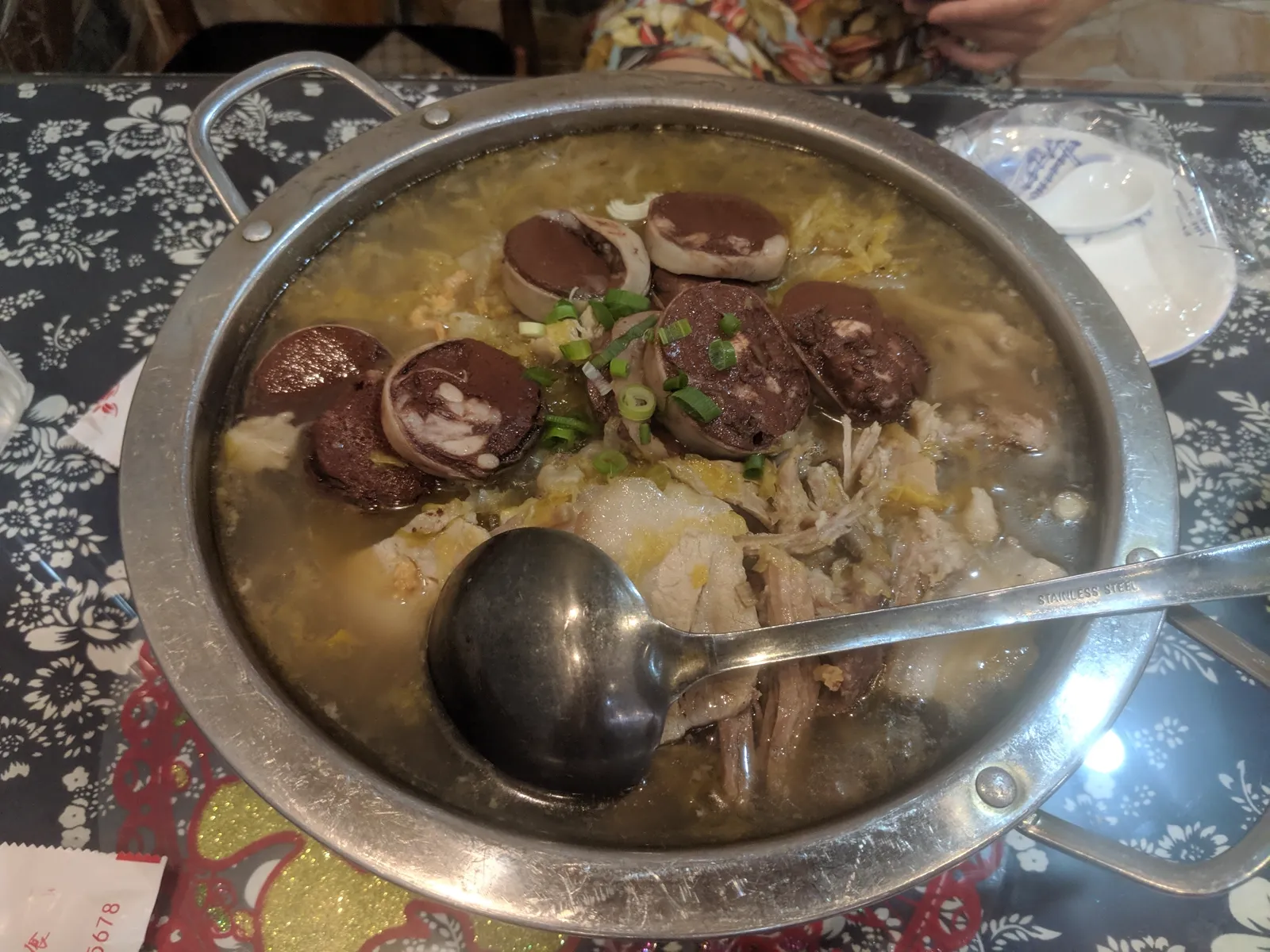
The essentials in 30 seconds
- The dish: a charcoal-heated copper pot of sour pickled-cabbage broth, into which you swish slices of pork belly, blood sausage, lamb, frozen tofu, and noodles. Sour and savory, not spicy. The Manchu family’s answer to a −20°C winter.
- The trio at the center: 酸菜 (suān cài, pickled cabbage) + 白肉 (bái ròu, white pork belly) + 血肠 (xuè cháng, blood sausage). The same three also appear as a sit-down stew; the hotpot is the cook-it-yourself version.
- Cost: the same range as any sit-down Northeast dinner, roughly ¥40–80 per person at an ordinary spot. See the budget guide for the full math.
- Where: old-style hotpot restaurants across the city, and in its home setting at Wulajie Manchu Town. Our food guide covers the rest of the Dongbei table.
What makes this hotpot different
China has a hotpot for every region, and most visitors know exactly one: the Sichuan chili-oil cauldron. Jilin’s belongs to the other pole. The broth is built from suan cai, the salt-fermented cabbage every Northeastern family used to keep in a crock through winter, simmered with pork-bone stock until it turns silky and sour. Thin slices of pork belly go in, then blood sausage, then whatever the table orders next: lamb, frozen tofu, wide potato noodles, mushrooms, napa cabbage. The classic pot is copper, heated by real charcoal in the center chimney, which keeps the broth at a rolling bubble without any plug in sight.
Wikipedia’s food editors describe the core method plainly: pickled cabbage and pork belly as the main ingredients, a charcoal copper pot, the cabbage simmered into the broth, the white pork swished through it, blood sausage added, eaten with sesame oil, soy sauce, and garlic. That is the whole idea. Everything else on this page is how to do it well.
The cousin you already know
If you have had Japanese shabu-shabu, you already know the technique: thin meat, boiling broth, a few seconds, lift, dip, eat. The shape of the evening is identical. The cousin-not-twin part is everything around it. Shabu-shabu is delicate and precise, built on dashi and ponzu, and the meal ends politely. Dongbei hotpot is a winter survival ritual scaled up for a table: a sour, porky broth that gets better as the night goes on, a copper pot roaring on charcoal, sesame-based dipping sauces you mix yourself, and portions that assume you have been outside in the cold all day. Same swish-swish instinct, completely different climate logic.
Beijing’s 涮羊肉 (shuàn yángròu, mutton hotpot) is the closer relative: same copper pot, same charcoal, same sesame dip. The difference is the sourness. Beijing keeps the broth plain and lets the mutton speak; Jilin sours the whole pot with pickled cabbage and adds pork. Try both if your trip passes through Beijing. You will taste the family resemblance immediately.
What goes into the pot
Order by pointing at the menu pictures, or let the waiter assemble the standard spread. The usual lineup:
- 酸菜 (suān cài): the soul of the pot. Already in the broth, and often a fresh plate on the side. Sour, mild, less vinegary than German sauerkraut, and it is the main event here, not a side dish.
- 白肉 (bái ròu): slices of pork belly, the “white meat.” Swish until just cooked through. This is the bite the whole pot exists for.
- 血肠 (xuè cháng): blood sausage, sliced. Tender, savory, nothing like a breakfast sausage. If blood sausage sounds daunting, the pork and lamb carry the meal fine without it.
- 羊肉片 (yángròu piàn): lamb slices, the Beijing-copper-pot classic, welcome here too.
- 冻豆腐 (dòng dòufu): frozen tofu, full of little holes that drink the sour broth. A Dongbei hotpot essential.
- 粉条/宽粉: potato-starch noodles, added late so they soak up the seasoned broth.
- Vegetables and mushrooms: napa cabbage, mushrooms, whatever is in season. They go in after the meats, so they cook in the enriched broth.
The sauce bar: mix your own dip
Northern hotpot restaurants have a self-serve sauce station, and mixing your dip is half the fun. The Dongbei classic base:
- 芝麻酱 (zhīma jiàng): sesame paste, thinned with a little broth. The foundation.
- 腐乳 (fǔrǔ): fermented tofu, a dab for salty depth.
- 韭菜花 (jiǔcài huā): leek-flower paste, the sharp green note that belongs specifically to this cuisine.
- Then to taste: 蒜泥 (minced garlic), 香菜 (cilantro), a splash of soy sauce, chili oil if you want heat.
There is no wrong answer. Watch what the table next to you mixes and copy the ratio you like. That is a completely legitimate strategy, and locals will approve.
How to eat it, in order
- Let the broth come to a full boil before anything goes in. The pot arrives already bubbling; top-ups of hot broth appear as the level drops.
- Meats first. Swish pork and lamb slices a few seconds each; they cook fast. Blood sausage just needs heating through.
- Then the sponges: frozen tofu, noodles, mushrooms, vegetables. They absorb the broth the meats have seasoned.
- End with noodles or soup. Many tables finish by dropping noodles into the final broth, or simply drinking a bowl of the sour soup. After two hours of cooking, that broth is the best thing in the pot.
- Pace yourself. This is a two-hour meal, not a quick dinner. Order in rounds rather than everything at once.
🔊 Pronunciation guide
Tap to hear each word (AI-voiced Mandarin demo: listen and repeat):
- 火锅: hotpot huǒguō
- 涮: to swish-boil shuàn
- 酸菜: pickled cabbage suāncài
- 白肉血肠: white pork and blood sausage báiròu xuěcháng
- 买单: “the bill, please” mǎidān
- 谢谢: “thank you” xièxie
Good to know
- Not spicy. The heat level is near zero unless you add chili oil yourself. If Sichuan hotpot scares you, this is the safe hotpot.
- Winter is peak season, but hotpot restaurants run year-round. In January the contrast of −20°C outside and a roaring copper pot inside is the whole point. Dress for the walk there: winter packing.
- Vegetarians can manage: the broth is pork-based, so ask for a clear-broth split pot (鸳鸯锅) if the restaurant offers one, and load up on tofu, mushrooms, noodles, and greens.
- No English menus outside hotels. The camera mode of a translation app plus pointing at other tables covers it. The food guide has the full ordering playbook.
- Wulajie Manchu Town is the home-setting version: Manchu hotpot where the Manchu community actually lives, combinable with a day trip. The pillar guide has the logistics.
- For the history: this is a Manchu family tradition of the Northeast, and the Manchu roots run deep in this city. Our Manchu heritage guide tells that longer story.
FAQ
How is this different from the 酸菜白肉 stew on restaurant menus? Same trio, two formats. The stew (酸菜白肉炖) arrives cooked, in a bowl, as a sit-down dish. The hotpot arrives as a bubbling pot and you cook each bite yourself. Order the stew when you want dinner; order the hotpot when you want an evening.
I don’t eat pork. Can I still do this? Yes. Lamb, beef slices, seafood, tofu, and mushrooms all take the same broth. Tell the table; nobody will mind.
Is the blood sausage safe? It is fully cooked pork blood sausage, heated through in boiling broth. If the idea bothers you, skip it. The pot does not need it.
How much should we order? For two people, one meat platter plus tofu, noodles, and vegetables is plenty. Portions are generous and the broth fills you up. Order a second round of whatever runs out.
Do I need a reservation? On winter weekends, yes for popular spots. Weekday lunches are walk-in friendly.
Start with what to eat in Jilin for the full Dongbei table, then warm up with the street food and night markets guides.