Jilin City Morning Markets: Breakfast Stalls and the City Waking Up
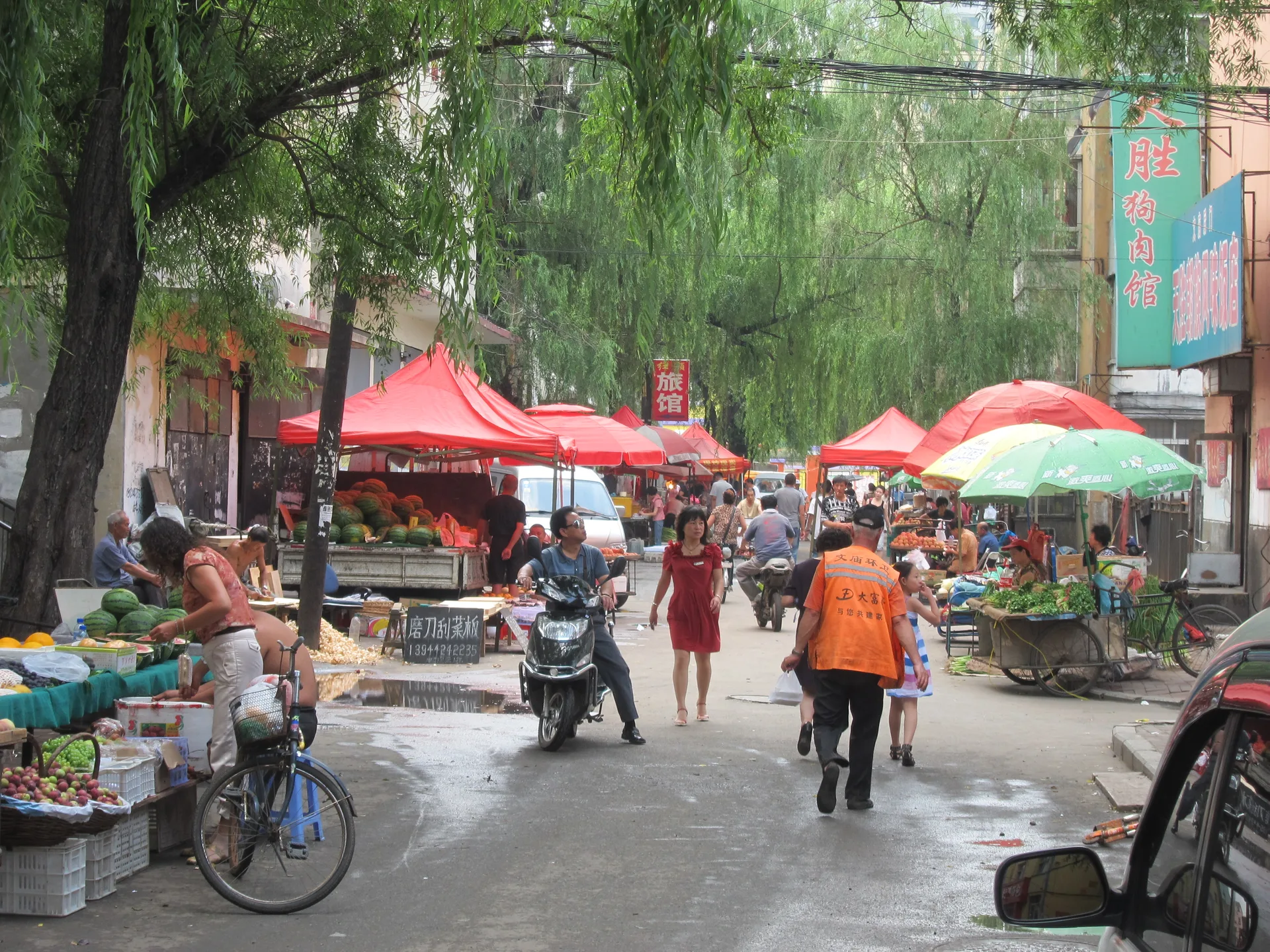
Jilin City wakes up at its morning markets. Before the museums open and before the tour buses move, the stalls are already steaming: soy milk, fried dough, tofu pudding, and baskets of buns, with produce rows behind them and the whole neighbourhood shopping for the day. It is the cheapest and most honest hour in the city, and it costs nothing to enter. Go once, early, and you will have seen Jilin more plainly than any single sight can show you.
At a glance
- Place: Morning markets across the old centre, mainly Changyi and Chuanying districts, plus one near Jiangbei Park in Longtan District
- When: Stalls set up around 5 AM, liveliest from about 6:30 to 8:30 AM, winding down by 9 to 10 AM. No posted hours, so treat this as the regional pattern
- Tickets: Free. Open air streets and market rows, no entrance fee
- Best for: A first morning in the city, breakfast hunters, and anyone who wants to watch local life before the sights open
- Watch out: Market locations shift with seasons and regulations. Ask your hotel for the liveliest market right now rather than navigating to a street name from an old blog
- Getting around: Bus 45 serves Huichun Street and Chaicaoshi, bus 4 serves Songjiang, bus 40 serves Jiangbei Park. See the transport guide
Jilin City morning markets in 30 seconds
- Huichun Street, Changyi District: Local listings call it the city’s biggest morning market. Bus 45 to Huichun Street, get off at Yan’an Road. The first stop for a visitor.
- Chaicaoshi, near the station: About 500 metres north of Jilin Station. Bus 45 to the Chaicaoshi stop. The closest market if you are staying in the station quarter.
- Songjiang, Chuanying District: Next to the People’s Mall second hall. Bus 4 to Songjiang. The old centre option, an easy pair with a Henan Street morning.
- Jiangbei Park, Longtan District: Near Jiangbei Park, across the river in the old industrial quarter. Bus 40 to Jiangbei Park. The local feeling choice, furthest from the tourist centre.
- Fengjiatun weekend fair: A bigger rural fair outside the city centre, reported to run on Saturdays and Sundays. Ask your hotel whether it is running the weekend you are there.
- The rule that covers all five: Go between 6:30 and 8:30 AM, follow the longest queue, and ask locally before you set out.
Why go at dawn
Think of a Western farmers market. The comparison holds for the ritual: growers selling what they picked, neighbours shopping for the day, and breakfast eaten standing up. The difference is the hour and the job. A farmers market is a weekend outing with craft stalls and coffee. A Jilin morning market is a weekday routine that starts before dawn, sells dinner ingredients first and breakfast second, and is mostly gone by mid morning. Same social function, completely different clock.
The market also explains the food. Our breakfast guide says it plainly: in a city where winter hits minus 20, breakfast is fuel, wheat based, steaming, and eaten early. The morning market is where that fuel is made and sold, pot by pot, at the hour the city needs it. A hotel buffet cannot show you this, because a hotel buffet is built for visitors. The market is built for the people who live here, and it shows in the pace: quick orders, no menus in English, and regulars who know their vendor by face.
The four city markets
Local listings name four morning markets inside the city, and this guide reports them as listed, with the honest caveat that markets move. Treat the names as a starting point and confirm the current spot with your hotel the night before.
Huichun Street, Changyi District. The big one, by local reputation the city’s largest morning market, and the best first stop. Take bus 45 to Huichun Street and get off at Yan’an Road. Expect the full spread: breakfast stalls at the edges, produce rows in the middle, and household goods at the far end. Arrive by 7 AM for the full energy. The station quarter sits nearby, so this market pairs naturally with a morning around the old station and the neighbourhoods guide station quarter walk.
Chaicaoshi, north of the station. About 500 metres north of Jilin Station, reachable on bus 45 to the Chaicaoshi stop. Smaller than Huichun Street and closer to where most visitors sleep, which makes it the practical choice when you only have one morning and do not want to spend it on a bus. The breakfast stalls here are the point. Eat first, browse second.
Songjiang, Chuanying District. Next to the People’s Mall second hall, on bus 4 to Songjiang. This is the old centre market, and the one that fits best into a walking day: eat at the market, then walk Henan Pedestrian Street while the shops open, following the old streets walk route from the morning rather than the afternoon. The market itself is smaller than Huichun Street, and that is its charm. Fewer stalls, shorter queues, and a slower look at what people actually buy.
Jiangbei Park, Longtan District. Near Jiangbei Park, on bus 40 to the Jiangbei Park stop. This is the market furthest from the visitor centre, across the river in the old industrial quarter, and the one where you are most likely to be the only foreigner there. Go here on a second morning, when you already know what to order and want the local feeling version. The night markets guide notes a grilled chicken wing stall near this park in the evening. Morning and evening, the park edge is where this district eats.
Weekend extension: Fengjiatun fair. Outside the city centre, a larger fair is reported to run on Saturdays and Sundays, and local answers call it the city’s biggest market. It is a rural fair rather than a city street market, with more livestock and farm goods and a longer trip. Ask your hotel whether it is running on your weekend and which bus currently serves it, and treat it as a half day outing rather than a breakfast stop.
What to eat: the breakfast round
The market breakfast is the breakfast guide lineup, eaten where it is made. Order in this order, and you will be full before 8 AM.
Doujiang and youtiao. Hot soy milk with crispy fried dough sticks. Tear the dough into pieces and dunk it. The classic, and the cheapest way to start.
Doufunao. Silky tofu pudding, and in the northeast it is savoury, topped with soy sauce, pickled vegetables, and sometimes minced meat. Do not ask for sugar. The south eats it sweet, and Jilin is firmly on the savoury side.
Baozi. Steamed buns, pork and cabbage being the northeastern default. Two or three make a meal. Watch for the cabbage juice drip, which the breakfast guide calls a rite of passage.
Jianbing. The savoury crepe: egg, crispy wonton sheet, scallions, and sweet spicy sauce, rolled to go. The original grab and go breakfast, and the easiest to eat while you walk the produce rows.
Yangtang. Lamb soup, milky white and peppery, with flatbread for dipping. The heavyweight option. Order this on the coldest morning and you will understand why the northeast eats the way it does.
Jianfen. Pan fried starch jelly, sliced and crisped, tossed with chili oil, vinegar, and savoury sauce. Chewy, crisp, sour, and spicy at once, it is the one item on the street food guide with no Western equivalent, and the taste most tied to this specific city. Some stalls sell it in the morning, and a stall with a queue at 7 AM is never wrong.
A full round of two or three of these rarely breaks 25 RMB. The budget guide puts the same number on a market breakfast, and the market is where that number is easiest to believe.
What to buy beyond breakfast
You do not need to buy anything to enjoy a morning market, and most visitors will not. But the produce rows are worth a slow look, because they show what the region grows and what the season is. Leafy greens and root vegetables in winter, beans and cucumbers in summer, and mushrooms and pine nuts from the Changbai forests when they are in season. Pickled vegetables and dried goods travel well, and they are the market souvenirs that actually get used: a bag of dried mushrooms costs little, packs flat, and cooks into a real meal back home. The souvenir guide covers what to carry home in more detail.
Two buying rules travel well. First, the queue is the review system, the same rule as the night markets. A stall with twenty locals waiting is never wrong, and a stall with no queue at 7:30 AM is telling you something. Second, food stalls do not haggle. Prices are fixed and usually posted in Chinese, and a phone calculator bridges everything. Goods stalls may allow a friendly cheaper please, but breakfast never does.
How a morning market works
- Go early. The good stalls sell out. By 9 to 9:30 AM most are packing up, and by 10 AM the street is a street again. Set the alarm. This is the one morning to be a morning person.
- Follow the steam and the queue. Same rule as the night markets: locals waiting means the right choice. The steam column over a breakfast stall is visible from a block away.
- Point, pay, eat. Point at what you want, hold up fingers for quantity, and say zhege, meaning this one, while pointing. Breakfast stalls are simpler than night markets: fewer choices, faster turnover, and no English needed.
- Eat there or take away. Stalls have a few stools, and nearby breakfast shops have tables. Taking away is completely normal. Say dabao and they will bag it.
- Cash or phone, both fine. QR codes work at most stalls. A few older produce vendors still prefer cash, so carry some yuan. Keep your phone in an inside pocket in winter, when the cold drains batteries fast.
Practical notes for the morning
- One market per morning: Do not try to visit two markets before breakfast. Pick the closest one, eat well, and save the second market for a second morning. The markets overlap heavily, and the difference between them is atmosphere, not inventory.
- Pair it with the day: A market breakfast slots into the 1 day itinerary before the museum morning, and into the old streets walk if you start at Songjiang. The market is the first stop, not a detour.
- Winter note: The market works in winter, and the breakfast stalls are at their best when it is cold. Dress for it before you leave the hotel, the way the winter packing list says, and eat the hot food first.
- Language: Essentially none is needed. Pointing, smiling, and the calculator app are a complete toolkit. The vendors are used to regulars, not tourists, so a smile and a point go further than a phrasebook.
- If you sleep in: You have missed it. Accept the loss and have an early lunch instead. The market will be there tomorrow morning, and so will the alarm.
Part of our Taste series. For the full trip plan, see the Jilin City Travel Guide.