Jilin Breakfast: What Locals Actually Eat in the Morning
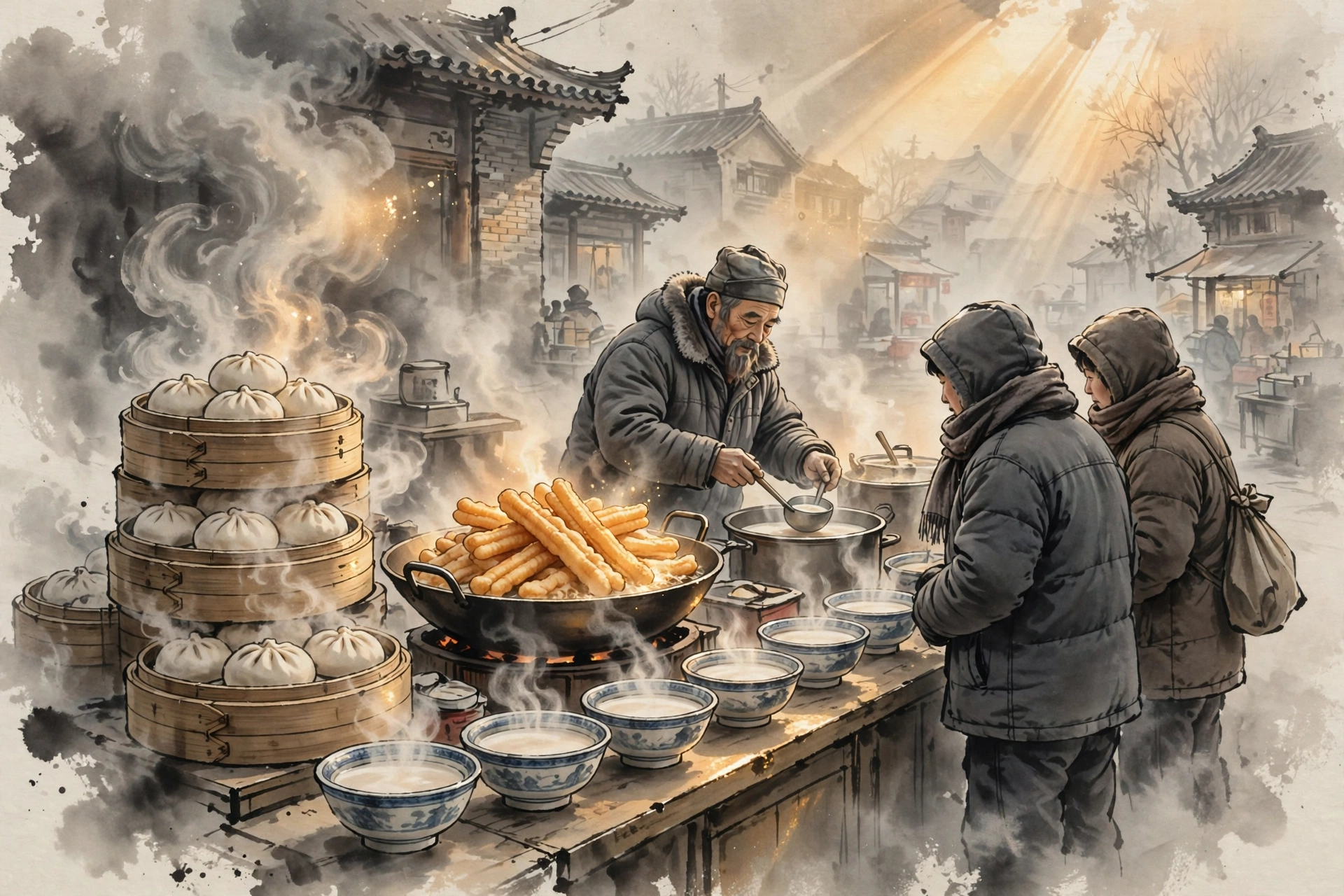
The essentials in 30 seconds
- In a city where winter hits −20°C, breakfast is survival equipment. Locals eat hot, hearty, and early: steaming buns, fried dough, soy milk, and tofu pudding, usually finished before 9 AM.
- Where: street stalls and tiny breakfast shops (早餐店) near markets and the station quarter. Follow the steam.
- The rule: go early (6:30–8:30 AM), point at what looks good, and don’t expect anyone to speak English — you won’t need it.
- Cost: a full breakfast rarely breaks ¥15–25. Your hotel buffet is a scam by comparison.
Why breakfast hits different here
Climate explains the menu. That’s the rule of this site, and breakfast is the purest example. When it’s −20°C outside and you’ve got a day ahead, you don’t want a croissant; you want calories, heat, and something to wrap your hands around. Northeast breakfast evolved as fuel for cold mornings, and it still tastes like it: wheat-based, steaming, unpretentious.
There’s a social layer too. The breakfast stall is the neighborhood’s morning parliament — retirees with their soy milk, workers grabbing baozi on the way to the bus, everyone half-awake together. Eat here once and you’ve seen Jilin more honestly than any museum will show you.
The lineup: what to order
Doujiang + youtiao (豆浆油条): hot soy milk with crispy fried dough sticks. The classic. Tear the youtiao into pieces and dunk. Think of Spain’s churros con chocolate. The cousin-not-twin part: churros are a weekend treat you go out for; doujiang-youtiao is Tuesday fuel, eaten standing up at a stall before work. Same dunking joy, completely different job.
Doufunao (豆腐脑): silky tofu pudding. Critical intel: in the northeast it’s savory, topped with soy sauce, pickled vegetables, sometimes minced meat. The great Chinese sweet-vs-savory tofu war is real (the south eats it sweet), and Jilin is firmly Team Savory. Don’t ask for sugar; you’ll get a look.
Baozi (包子): steamed buns, pork-and-cabbage being the northeastern default. Two or three make a meal. Watch for the cabbage-juice drip — a rite of passage.
Jianbing (煎饼): the savory crepe: egg, crispy wonton sheet, scallions, sweet-spicy sauce, rolled to go. The original grab-and-go breakfast, centuries before the energy bar.
Yangtang (羊汤): lamb soup, milky-white and peppery, with flatbread for dipping. The heavyweight option — order this on the coldest morning and you’ll understand Dongbei.
Zhou (粥): congee/porridge, plain or with century egg and pork. The gentle choice; every breakfast shop has it.
Chadan (茶蛋): tea eggs, marbled and savory, sold from the same pot everywhere. The universal sidekick. Grab one anywhere, anytime.
How it works (morning edition)
- Go early. The good stalls sell out; by 9–9:30 AM most are packing up. Set the alarm: this is the one morning to be a morning person.
- Follow the steam and the queue. Same rule as the night markets: locals waiting = correct choice.
- Point, pay, eat. Same toolkit as night markets: pointing, the calculator app, “这个” (zhège). Breakfast stalls are even simpler than night markets: fewer choices, faster turnover.
- Eat there or take away (打包, dǎbāo). Stalls have a few stools; shops have tables. Taking away is completely normal, just say “打包” and they’ll bag it.
- Cash or phone, both fine. Breakfast is the last holdout where cash still feels natural, but QR codes work everywhere too.
Where to find it
Breakfast clusters where people live and commute: around the station quarter, near morning markets, and along the older residential streets. Your hotel front desk can point you to the nearest 早餐店 (zǎocān diàn, “breakfast shop”). Or just walk out at 7 AM and follow your nose. The neighborhoods guide maps the areas.
Winter bonus: the contrast of stepping from −15°C air into a steaming breakfast shop is one of the trip’s small great pleasures. Summer bonus: you can actually sit outside.
FAQ
I’m vegetarian — what can I eat? Plenty: doujiang, youtiao, jianbing (ask without egg if vegan: “不要鸡蛋”, bú yào jīdàn), plain zhou, tea eggs (vegetarian, not vegan). Baozi fillings are usually meat. Ask or stick to the safe list.
Is street breakfast hygienic? The high-turnover rule applies: steaming-hot food from a busy stall is as safe as breakfast gets anywhere. If a stall is empty at 7:30 AM, keep walking.
What if I sleep in? You’ve missed it. Accept the loss and have an early lunch instead. Or check if your hotel does a late breakfast; just know it’s the consolation prize.
Can I get coffee? Yes. Chinese cities run on Luckin and independent cafés now, and Jilin is no exception. But coffee instead of a stall breakfast is a missed opportunity. Do both: stall first, coffee after.
New to Jilin food? Start with what to eat in Jilin, then eat your way through the night markets after dark.