Manchu Roots of Jilin: The Garrison Town That Named a Province
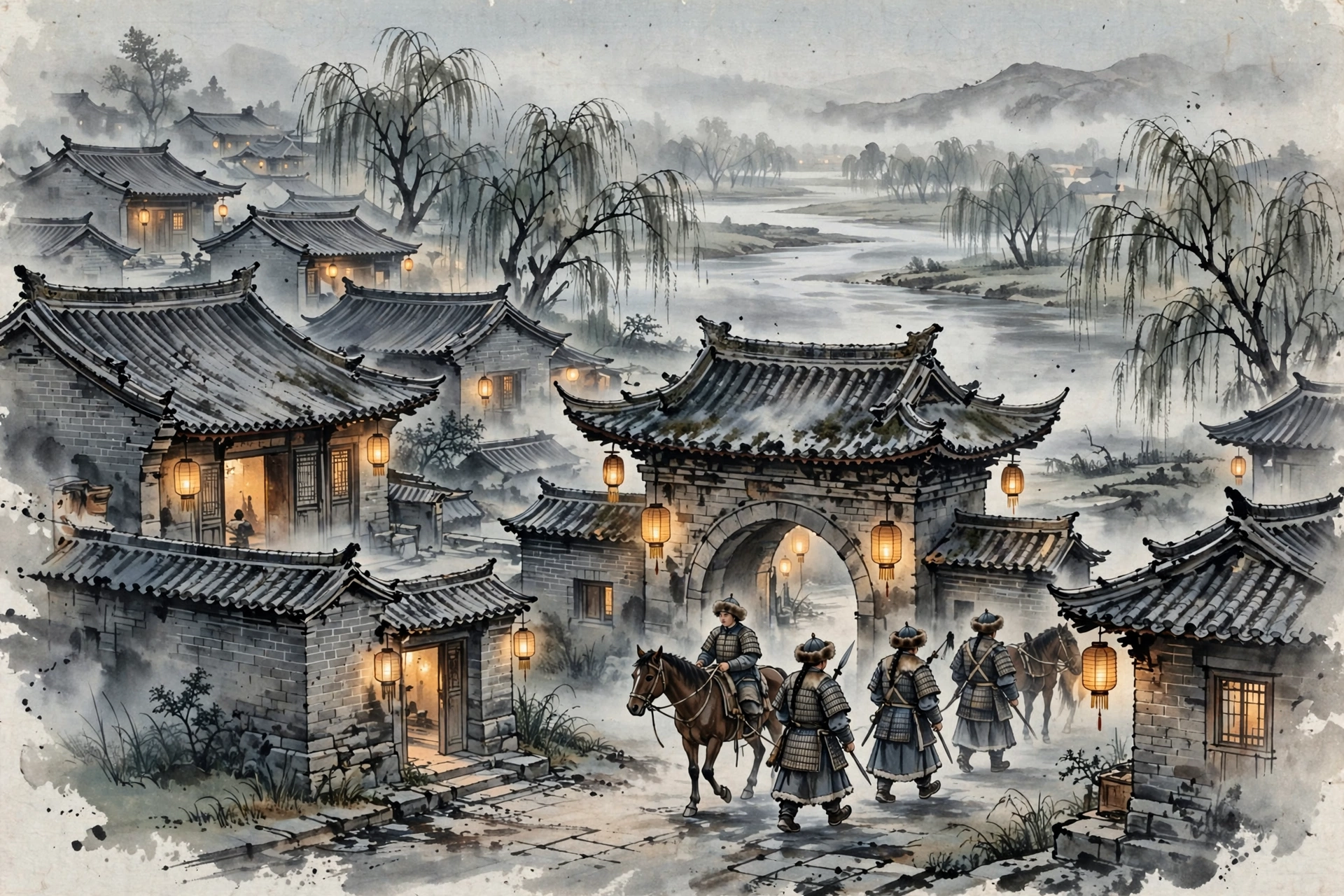
The essentials in 30 seconds
- The name: Jilin comes from the Manchu phrase Girin ula — “city along the river.” The province is named after the city, and the city is named in Manchu.
- The history: Jilin was a Manchu military town long before it was a Chinese city — a river-navy base founded in 1661, seat of the powerful General of Jilin, and for two centuries a closed frontier where Han immigration was restricted.
- Today: visit the Jilin City Manchu Museum (吉林市满族博物馆) for the full story, then eat your way through the living traces — Manchu hotpot, qipao origins, and shaman drums.
A city with a Manchu name
Every Chinese city name tells you something. Beijing means “northern capital.” Shanghai means “on the sea.” Jilin means — nothing, in Chinese. The two characters 吉林 are just phonetic stand-ins for a Manchu phrase: Girin ula, “city along the river” — the river being the Songhua, which still loops through the city in a great bend.
That’s your first clue that Jilin is different from most Chinese cities you might visit. This isn’t a Han city that happens to sit in the northeast. It’s a Manchu city that the Han arrived in later — and the name never changed.
Who were the Manchus?
Think of the Manchus as Northeast Asia’s answer to the Normans: a frontier people, organized for war, who conquered a much larger civilization and then ruled it for nearly three centuries (1644–1911, the Qing dynasty). The cousin-not-twin part: the Normans assimilated into French and English culture within generations; the Manchus held onto a separate identity — their own language, banner military system, and customs — for most of those 267 years.
Their ancestry in this region runs deep: the Sushen, Mohe, and Nüzhen (Jurchen) peoples who lived around today’s Jilin over 2,000 years before the Qing. When the Manchu rulers built their empire, Jilin wasn’t some remote outpost — it was home ground.
Why Qing emperors fortified Jilin
In 1661, the Qing court established a naval unit at Jilin to guard against Russian incursions pushing down from the north — warships on an inland river, which tells you how seriously Beijing took this frontier. The town grew around the garrison: a General’s Office, tribute collection, workshops, temples. The General of Jilin eventually governed a territory stretching all the way to the Sea of Japan.
For most of the Qing era, this region was deliberately kept Manchu. Han Chinese immigration was strictly controlled — the northeast was the dynasty’s ancestral homeland, not open for settlement. Only after 1860, when Russia took the coastal territories, did the Qing reverse course and open the gates; migrants poured in, mostly from Shandong, and by the early 1900s Han Chinese had become the majority.
So when you walk Jilin today, you’re walking a city that spent its first two centuries as a Manchu military headquarters — then reinvented itself in a single lifetime.
What to see: the Manchu Museum
The single best stop is the Jilin City Manchu Museum (吉林市满族博物馆):
- The building itself is the exhibit — the only fully intact Qing-dynasty courtyard house remaining in Jilin, all grey brick and sweeping roofs.
- Eight exhibition halls cover Manchu history (“Tracing Manchu Roots”), daily life, production, and intangible heritage — papercutting, embroidery, shamanic ritual objects.
- It’s a manageable half-day visit, and pairs naturally with the Jilin Confucian Temple — the Manchu rulers’ tribute to Chinese civilization, just across town.
For a deeper dive, take a day trip to Wulajie Manchu Town (乌拉街满族镇) upriver — an old Manchu settlement where the rime-ice crowds go in winter, but the Manchu heritage is the year-round story. (See our rime ice guide for the winter angle.)
Living traces: food, dress, and drums
Manchu culture didn’t vanish — it dissolved into northeastern Chinese life. Watch for it:
- The qipao (旗袍) — the iconic Chinese dress — is a Manchu garment. Qipao literally means “banner robe,” the banner being the Manchu military-administrative system. Every qipao in every Chinatown traces back here.
- Manchu hotpot — the region’s love of bubbling pots and pickled cabbage has Manchu roots; our food guide covers what to order.
- Shaman drums — Manchu shamanism predates Buddhism’s arrival in the northeast by centuries. You’ll see the drums and spirit poles in the museum; the rituals themselves survive mostly as performance now.
- The language — Manchu is critically endangered, with only a handful of fluent native speakers left. Hearing a greeting in Manchu at the museum shop is hearing something genuinely rare.
FAQ
Is Jilin a “Manchu city” today? Ethnically, no — like the rest of the northeast, it’s overwhelmingly Han Chinese now, with Manchu, Korean, and Hui minorities. Culturally, the Manchu layer is everywhere once you know to look: the name, the food, the qipao, the city’s whole reason for existing.
How much time do I need? The Manchu Museum: 2–3 hours. Wulajie: a half day. If you’re doing the full heritage circuit, pair this with the Confucian Temple — together they’re the two faces of Qing Jilin: the conquerors’ garrison and the civilization they honored.
Any etiquette I should know? Shamanic objects in the museum are religious artifacts, not props — look, don’t touch, unless a display explicitly invites it. Same rule as anywhere.
Part of our Culture & Heritage series. For trip planning, start with the Jilin City Travel Guide.