Longtan Mountain Fortress: A 1,600-Year-Old Goguryeo Stronghold in Jilin
The essentials in 30 seconds
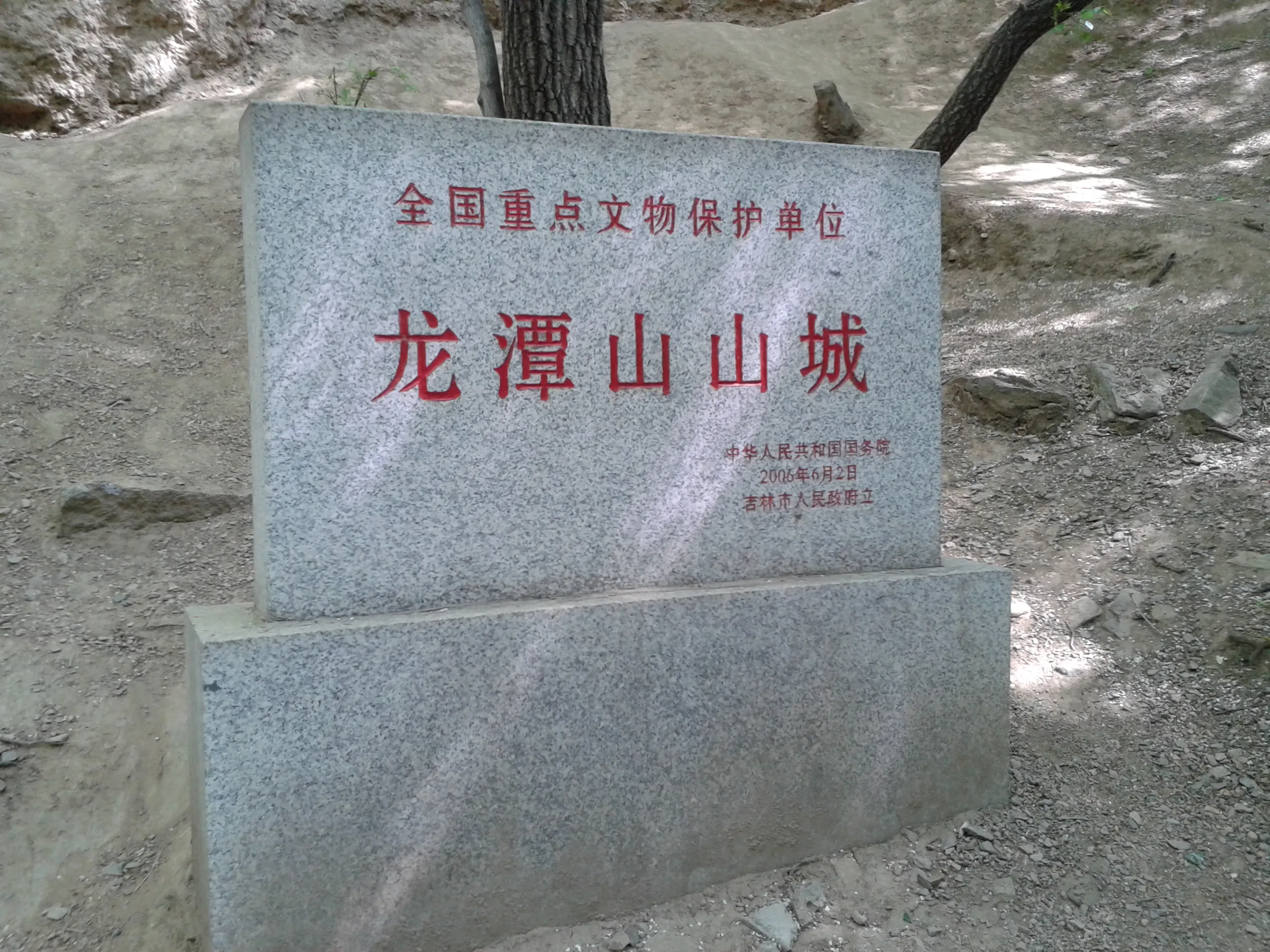
- What it is: A Goguryeo-era mountain fortress on Longtan Mountain, about 7 km east of downtown Jilin City. Roughly 2.4 km of rammed-earth walls snake along the ridgeline, enclosing the summit.
- How old: The walls go back to around the early 5th century, when Goguryeo fortified this hill after absorbing the local Buyeo state. The hill itself has traces of human activity stretching back 5,000 years.
- Status: A national key cultural relic since 2006 (provincial protection since 1961). Entry to the park is free.
- Why go: It is the rare Jilin sight where the history is older than the city by a millennium and a half, and the forest walk to the top is a pleasure in itself. Allow 2 to 3 hours.
A fortress with six landlords
Most ancient sites belong to one era. Longtan Mountain belongs to half a dozen. The story starts with the Buyeo people, who built the region’s first state here around 108 BC and put their capital, the “Deer Mountain Capital,” at the foot of this hill. In 37 BC a Buyeo prince named Jumong broke away south and founded Goguryeo, the kingdom that would eventually rule Manchuria and northern Korea for seven centuries.
Around 410 AD, Goguryeo’s King Gwanggaeto swallowed what was left of Buyeo and turned this hill into a military fortress guarding against the Mohe tribes to the north. When Goguryeo moved its capital to Pyongyang in 427, Longtan became the kingdom’s northern stronghold. During the Tang-Goguryeo wars it anchored the northeastern end of Goguryeo’s defensive line, until the Tang general Xue Rengui stormed it in 668, the same year Goguryeo fell.
The walls did not retire. The Bohai kingdom used the area (its Suzhou prefectural seat sat at the foot of the hill), then the Liao and Jin dynasties kept it as a military post. In the Ming era the Ula tribe rebuilt it as one of five defensive cities, until Nurhaci destroyed it in 1608 while unifying the Jurchens. The Qing then sealed the whole region as their “sacred homeland” and the fortress slowly went back to forest.
If you know Masada in Israel, you know the shape of the idea: a mountaintop fortress with a long view. The cousin-not-twin part is the construction. Masada is stone in the desert, built once and abandoned. Longtan is rammed earth mixed with crushed stone in a Manchurian forest, built, rebuilt, and reoccupied across sixteen centuries. The walls you walk are a palimpsest, not a monument.
What to see on the hill
The walls. The fortress is an irregular polygon, narrow east-west and wide north-south, totaling 2,396 meters. The cross-section is trapezoidal: 2 to over 10 meters high depending on terrain, 3 to 10 meters wide at the base. Unlike the famous stone-piled Goguryeo fortresses further south, these walls are yellow earth rammed with crushed stone, with some sections compacted flat in layers. Four platforms at the cardinal high points once held corner towers or watchtowers.
The Dragon Pool (龙潭). At the fortress’s northwest corner sits a round pond the locals call the “Water Prison,” with a legend about a chained dragon. Archaeology says otherwise: it is a Goguryeo-era reservoir, built when the walls went up. The water never dries and never rises. “Moon reflected in the Dragon Pool” is one of the classic Eight Sights of Jilin. An 1891 imperial plaque once hung by the pool; it was lost in the Cultural Revolution.
The “Dry Prison” (旱牢). Near the southwest ridge, a circular pit 10.6 meters across that locals took for a dungeon. Excavation showed it was a grain and military supply store. The folk names are wrong in the most instructive way: a fortress needs water and food far more than it needs cells.
The Broken Ridge (断岭). One stretch of wall is cleanly severed. Qing-dynasty records explain why: rumor spread that the dragon-shaped wall carried imperial feng shui, an omen of dynastic change, so the Qing ordered the Jilin garrison to cut it with Eight Banner troops. The gap is still there, and the name stuck.
South Heaven Gate (南天门). The highest platform, at the hill’s south end, with the best view of Jilin City and the Songhua River bend. Qianlong wrote a poem here during his eastern tour; the revolutionary elder Lin Boqu left one too. It is also a wartime memorial site from the anti-Japanese resistance. “Viewing the city from Dragon Mountain” is one of Jilin’s New Eight Sights.
The temple cluster. Halfway up, the Dragon-Phoenix Temple group (Guanyin, Dragon King, and Guandi halls) dates to 1754. Qianlong visited in 1757 and left an inscribed plaque. Television crews have used it as a filming location, most recently for the hit drama A Lifelong Journey (人世间).
Visiting today
Longtan Mountain Park sits in Longtan District, east of the city center. From downtown, a taxi takes about 20 minutes; city buses reach the park gate. See the travel guide for transport details. Park entry is free.
- The climb: stone steps and forest paths from the gate to the summit. The full loop past the walls, the Dragon Pool, and South Heaven Gate takes 2 to 3 hours at a strolling pace. The hill is not high and the paths are well maintained.
- Best order: gate → Dragon Pool and the “prisons” (the fortress story) → temple cluster → South Heaven Gate for the view → descend. This follows the chronology from Goguryeo to Qing.
- 2024 addition: the park added a dragon-shaped night illumination on the mountainside, which became a popular photo spot. Evenings are now worth considering.
- Pair it: with Beishan Park’s temples for the religious half of old Jilin, or the Confucian Temple for the scholarly half. Longtan is the military half.
FAQ
Is Longtan Mountain free? Yes. The park is free to enter. It is a public forest park as well as a heritage site.
How is this different from the Goguryeo sites at Ji’an? Ji’an (a few hours south) holds the UNESCO-listed Goguryeo capitals and tombs. Longtan is a smaller, rougher frontier fortress, and you can walk its walls in an afternoon without leaving Jilin City. Think of Ji’an as the capital museum and Longtan as the border outpost.
Can you still see the actual walls? Yes, though they read as forested ridges in places rather than clean masonry. The trapezoidal profile and the gate positions are still legible, and the 1962 survey markers match what you walk. Bring the imagination the site deserves; it rewards it.
When is the best time to visit? Autumn (September to October) for foliage and clear views from South Heaven Gate. Winter gives the walls a stark, photogenic look but dress for the cold; see our winter packing guide.
Part of our Culture & Heritage series. For the full trip plan, see the Jilin City Travel Guide.