Jilin Confucian Temple: The Northeast's First Temple to Confucius
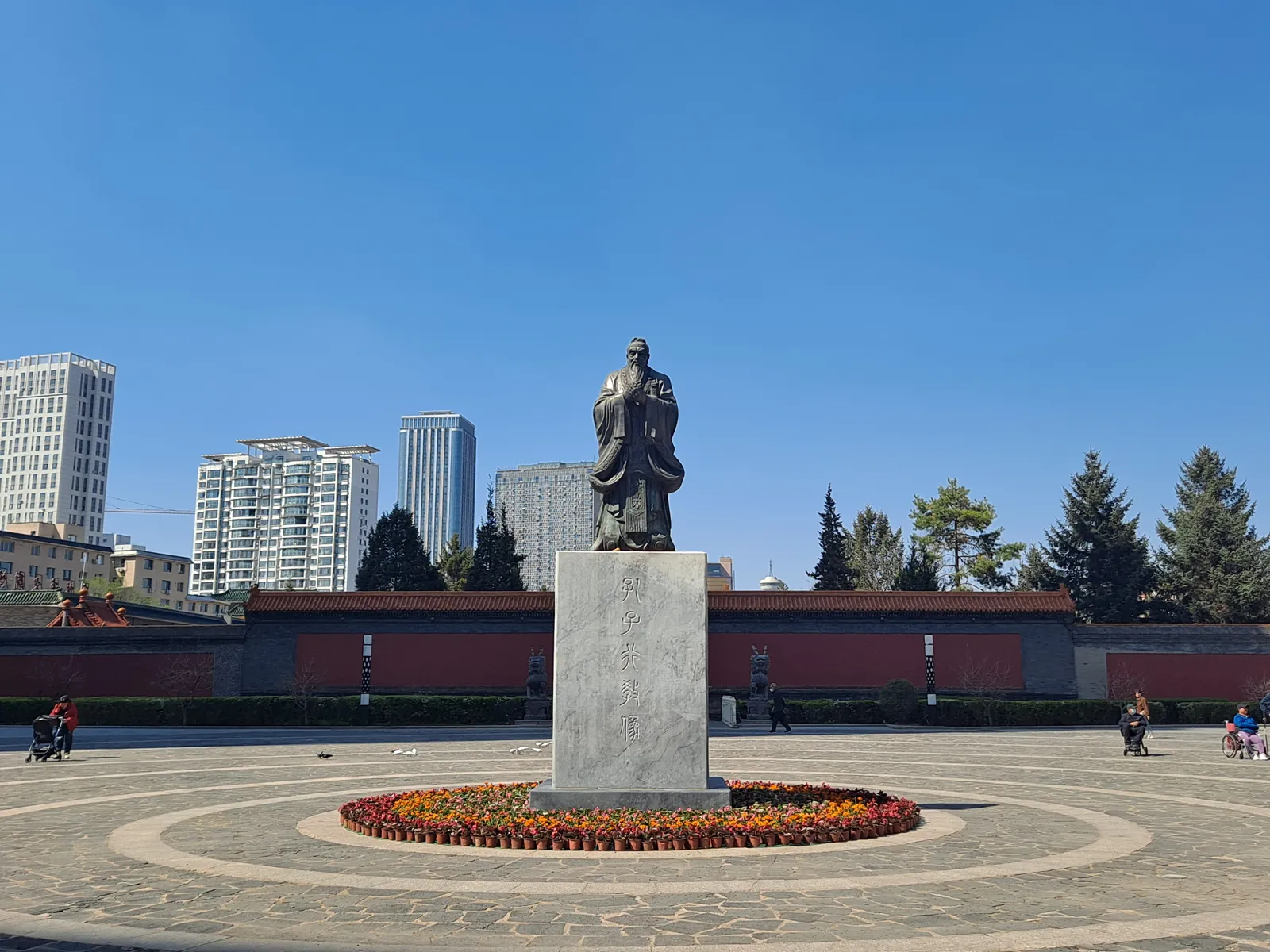
The essentials in 30 seconds
- What: The Jilin Confucian Temple (吉林文庙) — the first Confucian temple the Qing dynasty built in Northeast China, and still the region’s largest.
- Where: Changyi District, Jilin City (昌邑区南昌路).
- History in one line: first built in 1736 (Qianlong’s first year), moved to its current site and expanded in 1909; listed as a national-level protected cultural relic in 2006.
- Visit: allow 1.5–2 hours; entry is inexpensive (around ¥15 at last check — confirm locally).
Why this temple matters
To understand the Jilin Wenmiao, think of a Confucian temple as imperial China’s answer to a cathedral, a university, and a civil-service exam hall rolled into one — the ideological headquarters of the old order. Qufu has the original; Beijing has the imperial one. Jilin’s is the frontier one.
That’s the story that makes it worth your time: the Qing dynasty was founded by the Manchus, whose homeland was this very region. In 1736 they built a temple to Confucius — the supreme symbol of Han Chinese civilization — here in the Northeast. A conquest dynasty planting the Confucian order at the edge of its empire, then expanding the temple in 1909 as the dynasty itself was crumbling. The building is the history lesson: Confucianism wasn’t just a philosophy, it was how an empire held itself together, all the way to the frontier.
It’s often listed among China’s four great Confucian temples (with Qufu, Beijing, and Nanjing) — a claim you’ll see in Chinese sources; treat the ranking as local pride, but the scale is genuinely impressive for a regional temple.
A detail worth dropping at dinner: the sage honored in this quiet Jilin courtyard also stands on the U.S. Supreme Court building in Washington, D.C. The building’s East Pediment — the rear face most visitors miss — places Moses, Confucius, and Solon at its center, “chosen as representing three great civilizations” (Office of the Curator, supremecourt.gov). Confucius appears again on the courtroom’s south wall frieze among history’s great lawgivers. The reverence itself began in Qufu, Shandong — Confucius’s hometown, where the first temple rose over 2,500 years ago. What stands in Jilin is what happened when that reverence traveled north and met Manchu culture: a fusion, raised by a conquest dynasty at the edge of its empire, and today a symbol of how China’s peoples and cultures blended into one. And then it traveled further still — across the Pacific, onto the walls of America’s highest court. Culture, at its truest, carries no passport.
Walking the central axis
The temple faces south in the classical layout — walk it in order and it reads like a sentence:
- 照壁 Screen wall — the spirit wall at the entrance, blocking evil spirits (and curious eyes) the traditional way.
- 泮池 Pan Pond & 状元桥 Zhuangyuan Bridge — the half-moon pond every Confucian temple has, crossed by the “Top Scholar’s Bridge.” Students once believed crossing it brought exam luck; the superstition survives in selfie form.
- 棂星门 Lingxing Gate — the ornate gate named after the star of scholarship.
- 大成门 Dacheng Gate — the Gate of Great Achievement, leading into the main courtyard.
- 大成殿 Dacheng Hall — the Hall of Great Achievement, the temple’s heart: eleven bays wide, five deep, with a double-eaved hip roof. This is where the emperors’ sacrifices to Confucius were performed. Stand on the moon terrace in front and look back down the axis — the symmetry is the point.
- 崇圣殿 Chongsheng Hall — the Hall of Exalted Sage behind it, seven bays wide, honoring Confucius’s ancestors.
Side halls hold exhibitions on Confucius’s life, stone carvings, and portraits of the Yansheng dukes (Confucius’s descendants) and their wives. TripAdvisor reviewers call it “beautiful and peaceful” — and they’re right; on a weekday morning you may have the courtyards nearly to yourself.
Practical notes
- Tickets: inexpensive — around ¥15 at last check. Prices and hours shift; confirm before you go. (One Chinese travel site lists summer hours 8:00–19:00, other seasons 8:30–16:00 — treat as indicative, not gospel.)
- How long: 1.5–2 hours at a stroll.
- Combine with: it’s in the city, so pair it with a Songhua riverfront walk or the Beishan Park area — see our 2-day Jilin itinerary for the full route.
- The flea market: reviewers mention an antiques/flea market just outside the temple — worth a browse for old coins, calligraphy brushes, and the occasional genuine curiosity among the reproductions.
- Etiquette: it’s a historical site and former place of worship, not an active temple — but keep voices down in the halls all the same.
FAQ
Is it worth visiting if I’ve seen the Qufu or Beijing temple? Yes — for the frontier story, not the architecture contest. Qufu is the origin; Jilin is what the Confucian order looked like at the empire’s edge, built by Manchu rulers. Different chapter, same book.
Can I take photos inside? Courtyards, yes. Inside the halls, follow the posted signs — rules vary by hall and exhibition.
Is there an English guide? Don’t count on one. The layout is self-explanatory if you walk the axis in order (see above) — that sequence is the explanation.
What’s the best time to visit? Weekday mornings are quietest. In winter, go midday — the courtyards are beautiful with snow, but −20°C wind between stone halls is no joke. Dress per our winter packing list.