Jilin City Museum Guide: Meteorites, 5,000 Years, and Free Entry
Jilin City Museum in 30 seconds
- What it is: The city museum of Jilin City, a national second-class museum and 4A attraction on the south bank of the Songhua River. It holds more than 24,000 artifacts.
- Why go: Two permanent exhibitions carry the visit. One is the Jilin Meteorite Rain exhibition, the only exhibition in China devoted entirely to meteorites, built around the 1976 shower. The other walks 5,000 years of local history, from the Neolithic Age to the founding of Wula City in 1673.
- Practical: No. 100 Jilin Avenue, by Century Square. General admission is free. Open 9 AM to 4:30 PM, closed on Mondays except national holidays. Allow 2 hours.
- Deep dive: The meteorite story on its own deserves a full read. See the meteorite museum guide after this page.
A museum with two anchors
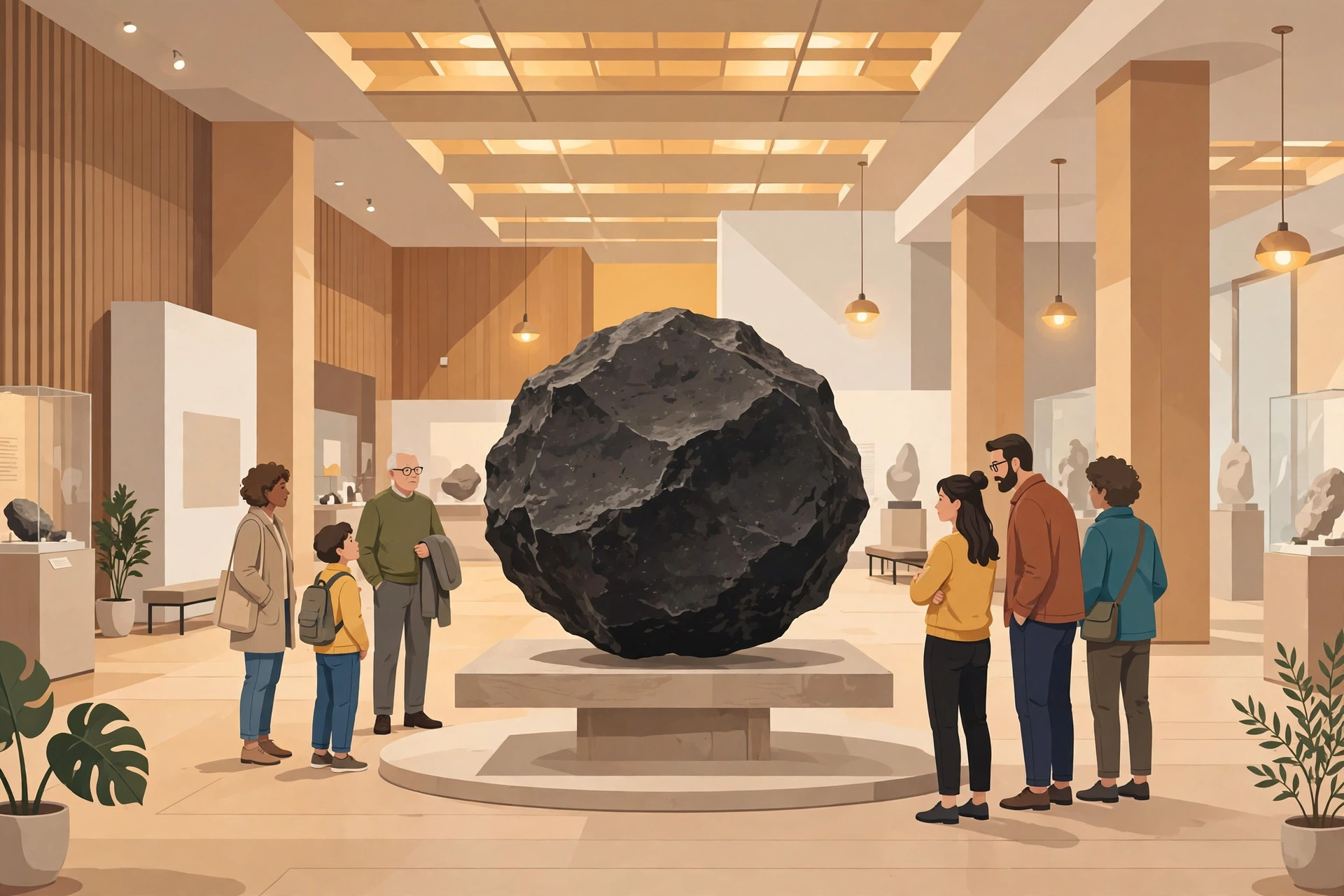
The meteorite hall. On March 8, 1976, a meteorite shower fell across about 500 square kilometers around Jilin City and Yongji County. Collectors recovered 138 large pieces weighing more than 2,600 kg in total. The centerpiece is Jilin No. 1, at 1,770 kg the largest single stony meteorite ever found.
The exhibition hall covers 2,060 square meters in four sections: Vestibule, Time-Space Tunnel, Exploration Hall, and a Main Hall 18 meters high, 54 meters long, and 32 meters wide. Its four themes run from meteorites and the universe through meteorites and Earth to the Jilin shower itself and meteorites in human culture. Highlights include a recreation of the Jilin No. 1 crater and a virtual imaging display of the No. 3 meteorite. The full story, including how the fall unfolded that afternoon, is in the meteorite guide.
The ancient history hall. This is the quieter half of the museum and the one most visitors rush past. It uses archaeology and supporting material to trace local development from the Neolithic Age to 1673, the year Wula City was founded in the Qing Dynasty. Most of the archaeological pieces come from the Xituanshan Culture, and most of the handed-down relics are Manchu pieces from the Qing Dynasty. If you read the Manchu roots guide first, this hall fills in the objects behind that history.
A third hall worth your time. The Niu Zihou and Peking Opera Art Exhibition tells how a Jilin businessman funded the Xi Liancheng Opera Company and helped shape Peking Opera, through original artifacts, more than 200 historical photographs, and reconstructed scenes. It is a good reminder that this city produced merchants and patrons, not just officials and soldiers.
History of the museum itself
The museum started as the Jilin City Exhibition Hall and became the Jilin City Museum in 1962. It moved into a new facility in 2009. Over six decades it has hosted more than 500 exhibitions and published more than 500 professional papers, which is part of why the labels here read more like a research museum than a tourist display.
Practical information
- Address: No. 100 Jilin Avenue (Jilin Street), by Century Square on the south bank of the Songhua River.
- Hours: 9 AM to 4:30 PM. Closed on Mondays except national holidays.
- Admission: General admission is free.
- Getting there: Buses to the Century Square stop, then a short walk. See the transport guide for bus and taxi basics.
- How long: 2 hours covers both permanent exhibitions. Add 30 minutes if you linger in the meteorite hall.
- Combine with: Century Square in the evening, the Songhua riverfront walk, and the things to do list. The museum also pairs well with a 2-day itinerary as the rainy-day or winter anchor.
FAQ
Is the Jilin City Museum the same as the Meteorite Museum? They share the site and the story. The meteorite exhibition is one permanent hall inside the city museum, and it is famous enough that many listings name it separately. Come to one address and you see both.
Is entry really free? General admission is free according to the municipal listing. Special or temporary exhibitions can differ, so check the notice at the door if you are coming for a specific show.
How much time do I need? Two hours is enough for both permanent exhibitions. The meteorite hall alone can absorb an hour if you read every panel.
Can I take photos? Museums in China usually allow photography without flash in permanent halls, but rules vary by exhibition. Follow the signs in each hall.