Jilin City History Timeline: From Hill Fort to Modern River City
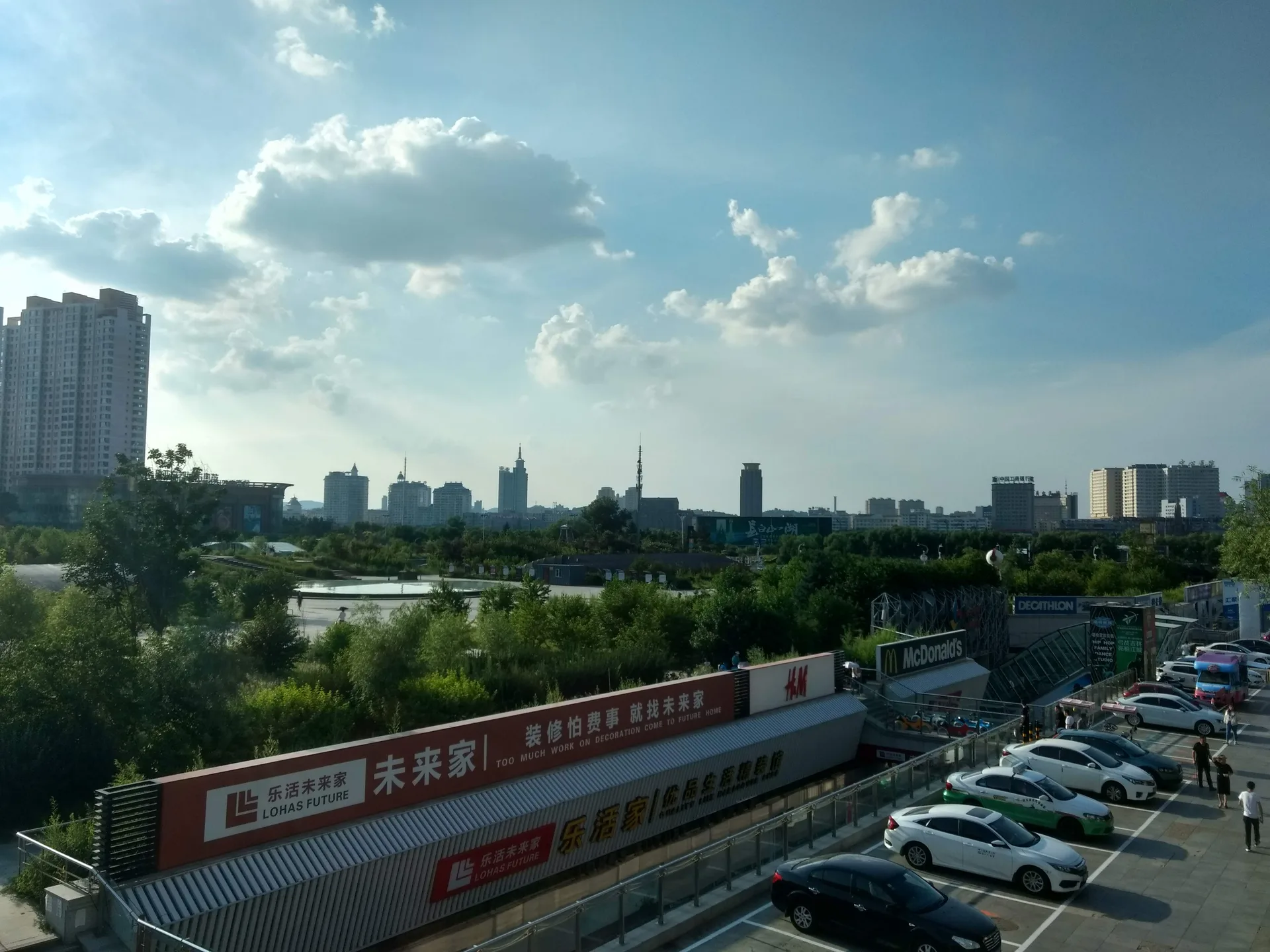
Jilin City is older than its founding date and younger than its name suggests, and both halves of that sentence are worth unpacking. The hill fortress east of downtown predates the city by more than a thousand years, while the walled Qing city itself dates to 1673, with its rise to regional capital following in 1676. This timeline strings the key dates together in order, and every stop below is a place you can still visit today.
At a glance
- Scope: One city, from ancient hill fort to modern river city
- Span: About 5,000 years of human activity on Longtan Mountain, and a walled city story from 1673 to the present
- How to use it: Read straight through for the story, or jump to the era that matches the site you plan to visit
- Where the history stands: Longtan Mountain, Beishan Park, Wulajie town, the old centre museums, and Fengman Dam
- Best season: Any season. Museums and temples work year round, and the hill fort walk is best in mild weather
- Honest note: Where sources give two dates for one event, this guide says so instead of picking the tidier one. The 1673 and 1676 pair below is the main case
Jilin City history timeline in 30 seconds
- Ancient hill: Longtan Mountain holds a Goguryeo era fortress from around the early 5th century, on a hill used for about 5,000 years.
- Manchu garrison: A river navy base in 1661, a walled city in 1673, and the governors headquarters in 1676 turned a frontier post into a regional capital.
- Temples and schools: Beishan temples from 1701, the Confucian Temple first built in 1736, and the arsenal founded in 1882 show a city adding scholarship and industry to soldiering.
- Upheaval and rebuilding: War smashed the arsenal in 1900, Japan seized the site in 1931, and the provincial capital moved to Changchun in 1954.
- Modern markers: The meteorite fall of 1976 and the arsenal exhibition hall reopening of 2024 are the two dates visitors remember most clearly.
Before the city: the hill that outlived six owners
Start before any city existed. Longtan Mountain Fortress sits about 7 km east of downtown, and its roughly 2.4 km of rammed earth walls enclose the summit. The hill has traces of human activity stretching back about 5,000 years. The Buyeo people built the regions first state here around 108 BC, with their capital at the foot of the hill.
In 37 BC a Buyeo prince named Jumong broke away south and founded Goguryeo, the kingdom that would rule Manchuria and northern Korea for seven centuries. Around 410 AD, after absorbing what was left of Buyeo, Goguryeo turned this hill into a military fortress guarding against the Mohe tribes to the north. When Goguryeo moved its capital to Pyongyang in 427, Longtan became the kingdoms northern stronghold. During the Tang Goguryeo wars it anchored the northeastern end of the defensive line, until the Tang general Xue Rengui stormed it in 668, the same year Goguryeo fell.
The walls did not retire. The Bohai kingdom used the area, the Liao and Jin dynasties kept it as a military post, and in the Ming era the Ula tribe rebuilt it as one of five defensive cities, until Nurhaci destroyed it in 1608 while unifying the Jurchens. The Qing then sealed the whole region as their sacred homeland and the fortress slowly went back to forest. Think of the walls as pages reused by successive owners rather than a single monument raised once. The comparison works for layering, and the difference matters: a single monument tells one reign, while these walls carry Buyeo, Goguryeo, Bohai, Liao, Jin, Ming, and Qing layers in one walk.
1613 to 1676: the Ula fall and the garrison city
The next chapter belongs to the Ula tribe. Wulajie Manchu Town, about 30 km north of the city, was the capital of the Ula tribe, one of the four Hulun Jurchen tribes. The walled Ula city fell in 1613, in the campaign that ended the tribe as an independent power. A new Ula town was built in 1701 under the Dasheng Ula superintendent Mukedeng, and that is the town whose street you walk today.
Meanwhile the Qing court was turning the river bend into a military base. In 1661 it established a naval unit at Jilin to guard against Russian incursions pushing down from the north. Warships on an inland river show how seriously Beijing took this frontier. The town grew around the garrison, with a Generals Office, tribute collection, workshops, and temples.
Then come the two dates that cause the confusion. The Jilin City Museum history hall traces local development from the Neolithic Age to 1673, the year Wula City was founded in the Qing dynasty. In 1676 the military governors headquarters moved here from Ningguta, effectively making the city the capital of a vast territory. A useful way to hold both dates is the house analogy: 1673 is the year the walls went up, and 1676 is the year the governor moved in. The analogy holds for sequence, and the difference is that a house has one owner while this city gained a whole administration, with officials, craftsmen, and trade following the headquarters.
The name itself dates from this era. Jilin comes from the Manchu phrase Girin ula, meaning city along the river, and the province is named after the city. For most of the Qing era this region was deliberately kept Manchu, with Han immigration strictly controlled, because the northeast was the dynastys ancestral homeland rather than open settlement land.
1701 to 1776: temples rise on the hill and in the city
With the garrison secure, the city added faith and learning. On Beishan, the Guandi Temple dates to 1701, the Yaowang Temple to 1738, and the Yuhuang Pavilion to 1776, three temples of three traditions sharing one hill. See the Beishan Park temples guide for the full set.
The Jilin Confucian Temple was first built in 1736, in the first year of the Qianlong reign, as the first Confucian temple the Qing dynasty built in Northeast China. It was moved to its present site and expanded in 1909, and it remains the regions largest. Walk its south facing axis in order, from screen wall and half moon pond through Lingxing Gate and Dacheng Gate to Dacheng Hall, and the temple reads as the scholarly counterpart to the garrison city. The Manchu rulers built the garrison, and they also honoured the civilization they ruled.
On Longtan Mountain, the Dragon Phoenix Temple group dates to 1754, and Qianlong visited in 1757 and left an inscribed plaque. By the late 1700s the city had all three faces in place: soldier, scholar, and worshipper.
1860 to 1932: opening, industry, and foreign stone
After 1860, when Russia took the coastal territories, the Qing reversed course and opened the gates. Migrants poured in, mostly from Shandong, and by the early 1900s Han Chinese had become the majority. The city reinvented itself within a single lifetime, from closed Manchu homeland to open trading city.
Industry arrived with the Jilin Arsenal. In May 1881 the Qing official Wu Dacheng proposed an arsenal to defend the northeast against Russia, construction began in March 1882, and the site became the only large scale modern arms factory in Northeast China, built at a cost of nearly 2.5 million taels of silver. In the same year it opened, it also minted Chinas first machine made silver dollars, the changping one tael coins, with characters brushed by Wu Dacheng himself. Russian troops smashed the factory in 1900, and Japan seized the site in 1931.
Foreign stone arrived in the same decades. French priests of the Paris Foreign Missions Society arrived in Jilin in 1898 and bought the riverside plot in 1902, but construction of Sacred Heart Cathedral only began in 1917 and took ten full years before consecration in 1926. From 1926 until 1994 it was the cathedral church of the Jilin Diocese, until the diocesan administration moved to Changchun. In 2013 it was listed as a national level protected heritage site, the highest heritage designation in China.
The year 1932 left two buildings that now serve as museums. A Trip.com listing reports the Administrative Museum building began as the Jilin Provincial Police Department in 1932, and the Manchu Museum house at No. 47 Desheng Road was also built in 1932 as the courtyard home of Wang Baichuan. One year, two buildings, two stories: government and private wealth, both preserved.
1937 to 1976: dam, capital move, and a stone from the sky
Construction of the first Fengman Dam began in 1937, when northeast China was under Japanese occupation. The reservoir began to fill in November 1942, the first generators were running by March 1943, and the dam was finished in 1953 as a concrete gravity dam 91 metres high and 1,080 metres long. See the Fengman Dam and Songhua Lake guide for the half day trip. By 2007 the old dam had been rated a dangerous dam, and a new dam rose about 120 metres downstream between 2015 and 2019, with a capacity of 1,480 megawatts. The old dam was dismantled in 2019, with nearly 400 metres kept as industrial heritage.
The administrative story closed in 1954, when the provincial capital moved to Changchun. That ended the 278 year run from 1676 to 1954 during which Jilin City served as a regional centre, and it is the span the Administrative Museum now tells in full. The city museum itself started as the Jilin City Exhibition Hall and became the Jilin City Museum in 1962, moving into a new facility in 2009.
Then, on March 8, 1976, the sky intervened. A fireball tore over Jilin and shattered high in the atmosphere, raining 138 meteorites across about 500 square kilometres. The centrepiece is Jilin No. 1, at 1,770 kg the largest single stony meteorite ever found, displayed in the city museum meteorite hall, which covers 2,060 square metres. For the full afternoon by afternoon account, see the meteorite guide.
2006 to 2024: listing, reopening, and the timeline today
The 2000s turned preservation into the main plot. The Confucian Temple and Longtan Mountain Fortress were both listed as national level protected sites in 2006. The Wulajie Qing building group was listed by Jilin Province in 2007, the town was named a Chinese Famous Historical and Cultural Town in 2008, and the building group reached national listing in 2013, the same year as the cathedral. The arsenal site was listed as a national level protected heritage site in 2019. National listing in China works roughly like listed building status elsewhere: it marks a site for protection and restricts alteration. The difference is scale: one designation here can cover a whole building group or a 2.4 km wall circuit, not a single facade.
The most recent entry is a reopening. The surviving arsenal north gate and 1928 ammunition depots reopened on May 1, 2024 as the 1881 Jilin Arsenal Exhibition Hall, drawing more than 800,000 visitors in its first year. The timeline therefore ends where it began, with a defensive site finding a new public use. The fortress on the hill became a park, the gun factory became an exhibition hall, and the police office became a museum of government.
How to walk this timeline
- One morning, old centre: Follow the heritage architecture walk for the cathedral, the Administrative Museum, the Confucian Temple, and the arsenal, in that geographic order.
- One afternoon, museums: Pair the city museum meteorite hall and 5,000 year history hall with the Manchu Museum for the Manchu half of the story.
- One half day, the hill: Walk Longtan Mountain for the pre city chapters, then Beishan Park for the temple chapters.
- One half day, the river story: Take the Fengman Dam trip for the 1937 to 2019 industrial chapter, and the Wulajie trip for the 1613 and 1701 chapters.
- Full trip plan: For the city overview behind this timeline, see the Jilin City travel guide, and for a day that mixes timeline stops with river and food, see the 1 day itinerary.
Part of our Culture & Heritage series. For the full trip plan, see the Jilin City Travel Guide.