Jilin City Heritage Architecture Walk: Four Old Buildings, Four Eras, One Morning
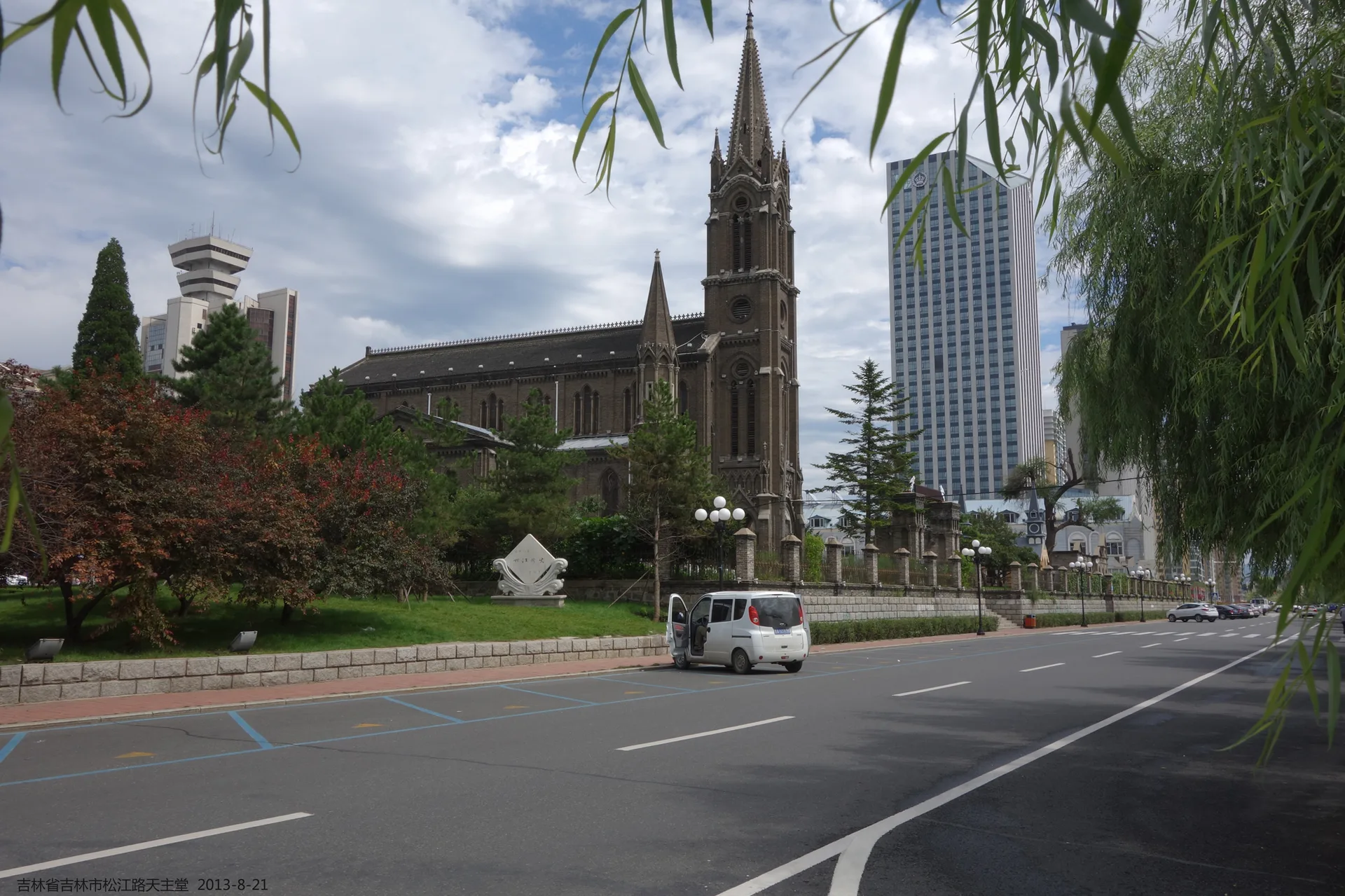
Four old buildings in Jilin City tell the story of four different eras, and they sit close enough to visit in one morning. Start at a French Gothic cathedral on the river, step into a 1932 office turned museum of government, walk the axis of a Confucian temple first built in 1736, and finish at a gun factory from 1882 that now hosts art shows. No single ticket covers all four, and opening hours vary by stop, so this guide gives the route plus the caveats, stop by stop.
At a glance
- Place: Jilin City old centre, on and near the north bank of the Songhua River
- Duration: One morning, about 4 hours including short taxi hops, 1 hour per stop
- Stops in order: Sacred Heart Cathedral, Jilin Administrative Museum, Jilin Confucian Temple, Jilin Arsenal
- Tickets: No combined ticket. See each stop below, and confirm at the door, since listing claims and older guides disagree on the temple price
- Best season: Any season. Courtyards are best in mild weather, and winter snow suits the temple and the cathedral exterior
- Watch out: Recent listings report the Confucian Temple closed on Mondays. The Administrative Museum hours in listings may reflect its upstairs restaurant as much as its exhibition floors, so visit in daytime
- Getting around: On foot inside each quarter, plus taxi or Didi between clusters. See the transport guide
Jilin City heritage architecture walk in 30 seconds
- Stop 1, Sacred Heart Cathedral: A complete Gothic church built by French missionaries between 1917 and 1926, at 3 Songjiang Middle Road by the north end of Jilin Bridge. Its bell tower rises 45 metres. It is still an active church.
- Stop 2, Jilin Administrative Museum: A themed museum about Jilin City as a regional administrative centre from 1676 to 1954, inside a building that began as the provincial police department in 1932, on Desheng Street in Chuanying District. No street number is confirmed, so navigate by the museum name.
- Stop 3, Jilin Confucian Temple: The first Confucian temple the Qing dynasty built in Northeast China, first built in 1736 and moved to its present site and expanded in 1909, at No. 2 Nanchang Road in Changyi District. Walk the south facing axis in order.
- Stop 4, Jilin Arsenal: Northeast China’s only modern Qing arsenal, founded in 1882, at 204 Jiangwan Road in Changyi District. The surviving north gate and 1928 ammunition depots reopened as an exhibition hall on May 1, 2024.
- Route rule: Walk the quarters, ride between them. The cathedral and the museum sit close together in the old centre, and the temple and the arsenal both sit in Changyi District, but the last leg east along the north bank is best done by taxi.
Why these four buildings, in this order
Think of this walk the way a walking day works in a small European old town, where centuries sit side by side within a few streets. The comparison holds for pace: one river, one old centre, four buildings you can enter and read like chapters. The difference is what fills the chapters. Few European old towns pack a Confucian temple, a gun factory that minted coins, a French Gothic cathedral, and a Republican era office into one morning, and few of them changed hands as often as these four did.
The order follows geography, not chronology. You start on the riverfront, move inland to the government quarter, cross into Changyi District for the temple, and finish east along the north bank at the arsenal. If you prefer chronology, read the stops in this order instead: temple (1736), arsenal (1882), cathedral (1917 to 1926), museum building (1932). Either way, the walk makes the same point. Jilin City was not one thing for long. It was a Confucian frontier city, an industrial frontier city, a missionary outpost, and a provincial capital, sometimes within a single lifetime.
Stop 1: Sacred Heart Cathedral, the Gothic surprise
Start at Sacred Heart Cathedral at 3 Songjiang Middle Road, Chuanying District, by the north end of Jilin Bridge. French priests of the Paris Foreign Missions Society arrived in Jilin in 1898 and bought the riverside plot in 1902, but construction only began in 1917 and took ten full years, through the fall of the Qing and warlord chaos, before consecration in 1926.
What to look at: the west front with its twin tower composition and central bell tower, the Latin cross plan (33 metres north to south, 27 metres across) best appreciated from the side, and inside, more than a dozen round stone columns over 20 metres tall, stained glass, and five altars, all in brick and stone with no wooden beams. From 1926 until 1994 this was the cathedral church of the Jilin Diocese, until the diocesan administration moved to Changchun. In 2013 it was listed as a national level protected heritage site, the highest heritage designation in China.
Practical note: this is an active church. Dress respectfully, keep your voice down, and avoid visiting during Mass unless you intend to attend. Exterior photography is fine, and inside you should follow posted rules. Allow 1 hour, and combine the stop with a look at the riverfront before you head inland.
Stop 2: Jilin Administrative Museum, the office that ran a region
From the cathedral, head inland to the Jilin Administrative Museum on Desheng Street in Chuanying District, in the municipal government area. The museum guide for this venue notes it sits near the river walk and the cathedral, which is why it works as stop 2. Navigate by the museum name, since no street number is confirmed in the sources found for that guide.
The building is the exhibit as much as the collection. A Trip.com listing reports it began as the Jilin Provincial Police Department in 1932 and later served as the Municipal Construction Committee office, before its present use as a themed museum. Inside, the story runs from 1676, when the military governor’s headquarters moved here from Ningguta, to 1954, when the provincial capital moved to Changchun. That span of 278 years is the whole point of the visit.
Visit in floor order: first floor everyday memory and a retro post office corner, second floor Historical Corridor with maps, seals, and official uniforms, third floor a retro restaurant that is a separate paid service. Allow 1 to 2 hours, or 1 hour if you go straight to the second floor.
Practical note, stated plainly: the same listing reports free entry and hours of 10:00 to 22:00 year round, with no weekly closure day stated. Treat both as listing claims, not confirmed facts, because the top floor is a restaurant and exhibition floors may close earlier than the restaurant. Visit in daytime, and check the notice at the door. Do not confuse this museum with the Jilin City Museum by Century Square or the Jilin Manchu Museum at No. 47 Desheng Road. Check the museum name at the door, not just the street.
Stop 3: Jilin Confucian Temple, the axis walk
Next, cross into Changyi District for the Jilin Confucian Temple at No. 2 Nanchang Road, Wenmiao Hutong. First built in 1736, in the first year of the Qianlong reign, and moved to its present site and expanded in 1909, it was the first Confucian temple the Qing dynasty built in Northeast China, and it remains the region’s largest. It was listed as a national level protected cultural relic in 2006.
Walk the south facing axis in order, and the temple reads like a sentence: screen wall, half moon Pan Pond crossed by the Top Scholar’s Bridge, Lingxing Gate, Dacheng Gate, then Dacheng Hall, eleven bays wide and five deep with a double eaved hip roof, where sacrifices to Confucius were performed, and behind it Chongsheng Hall, seven bays wide, honouring Confucius’s ancestors. Side halls hold exhibitions on Confucius’s life, stone carvings, and portraits of his descendants.
Practical note: recent listings report hours of 8:30 to 16:30 with Monday closure, and free entry. That free entry conflicts with the earlier temple guide, which quoted about 15 RMB at last check, so confirm the price at the gate rather than trusting either figure alone. Some recent visitor reports also mention areas under maintenance, so a weekday morning visit gives you the quietest courtyards and the best chance of full access. Allow 1.5 to 2 hours at a stroll, or 1 hour if you walk the axis only.
Stop 4: Jilin Arsenal, the factory that printed money
Finish east along the north bank at the Jilin Arsenal at 204 Jiangwan Road, Dongjuzi Street, Changyi District, a short taxi ride from the city centre. Take a taxi for this leg. It is the longest hop of the morning, and the riverside road east rewards you with the gate itself as the destination.
The story in one paragraph: in May 1881, the Qing official Wu Dacheng proposed an arsenal to defend the northeast against Russia, construction began in March 1882, and the site became the only large scale modern arms factory in Northeast China, built at a cost of nearly 2.5 million taels of silver. In the same year it opened, it also minted China’s first machine made silver dollars, the changping one tael coins, with characters brushed by Wu Dacheng himself. Russian troops smashed the factory in 1900, Japan seized the site in 1931, and after decades as a state machinery plant, the surviving north gate and 1928 ammunition depots reopened on May 1, 2024 as the 1881 Jilin Arsenal Exhibition Hall, drawing more than 800,000 visitors in its first year. The site was listed as a national level protected heritage site in 2019.
What to look at: the restored north gate, the 1928 brick ammunition depots, and the exhibition halls with old machinery, documents, and the coin story. The courtyard has become a public square with regular cultural events. Allow 2 hours if you linger, or 1 hour for the gate, the depots, and the main halls. Exhibition schedules and any ticket policy can change, and the site only fully opened to the public in 2024, so check locally before making a special trip.
Practical notes for the walk
- Order and transport: Cathedral, then Administrative Museum, then Confucian Temple, then arsenal. Walk inside each quarter. Take a taxi or Didi between clusters, above all for the temple to arsenal leg. See the transport guide for bus and taxi basics.
- Monday plan: If the morning falls on a Monday, start with the cathedral and the Administrative Museum, check the temple gate notice before counting on that stop, and keep the arsenal as the anchor of the day, since its exhibition hall opening is a separate question from the temple closure.
- Tickets: No combined ticket exists for these four stops. Confirm each price at the door. The temple price is the one case where recent listings and the earlier guide disagree, so that stop deserves the check most.
- Etiquette: The cathedral is an active church and the temple halls are quiet historic space. Keep voices down in both, follow posted photography rules, and skip flash where worshippers are praying or near old paper and textiles.
- Extending the day: This walk pairs with the 1 day itinerary if you want a museum morning instead, and with the things to do list if you want to add the riverside walk or a night market dinner after the arsenal. For the city overview behind this route, see the Jilin City travel guide.
Part of our Culture & Heritage series. For the full trip plan, see the Jilin City Travel Guide.