The Jilin Arsenal: Where Qing China Built Guns, Minted Coins, and Now Hosts Art Shows
The essentials in 30 seconds
- What it was: Founded in 1882, the Jilin Arsenal (吉林机器局) was the only large-scale modern arms factory in Northeast China, built during the Self-Strengthening Movement to defend against Russia.
- The twist: This gun factory also minted China’s first machine-made silver dollars in 1882, the famous “changping one tael” coins, with calligraphy by its own founder.
- Today: Looted by Russian troops in 1900 and seized by Japan in 1931, the surviving gate and workshops reopened in May 2024 as the 1881 Jilin Arsenal Exhibition Hall, drawing 800,000+ visitors in its first year. Half a day, pairs well with the Manchu museum.
A factory born from fear of Russia
In May 1881, a Qing official named Wu Dacheng (吴大澂) submitted a memorial to the throne with an urgent argument: Russia was nibbling away at the northeastern border, Manchuria had no modern weapons of its own, and Jilin needed an arsenal. The court agreed. Wu personally picked the site: east of Jilin city, on the north bank of the Songhua River. Locals just called it “Dongjuzi”, the East Bureau.
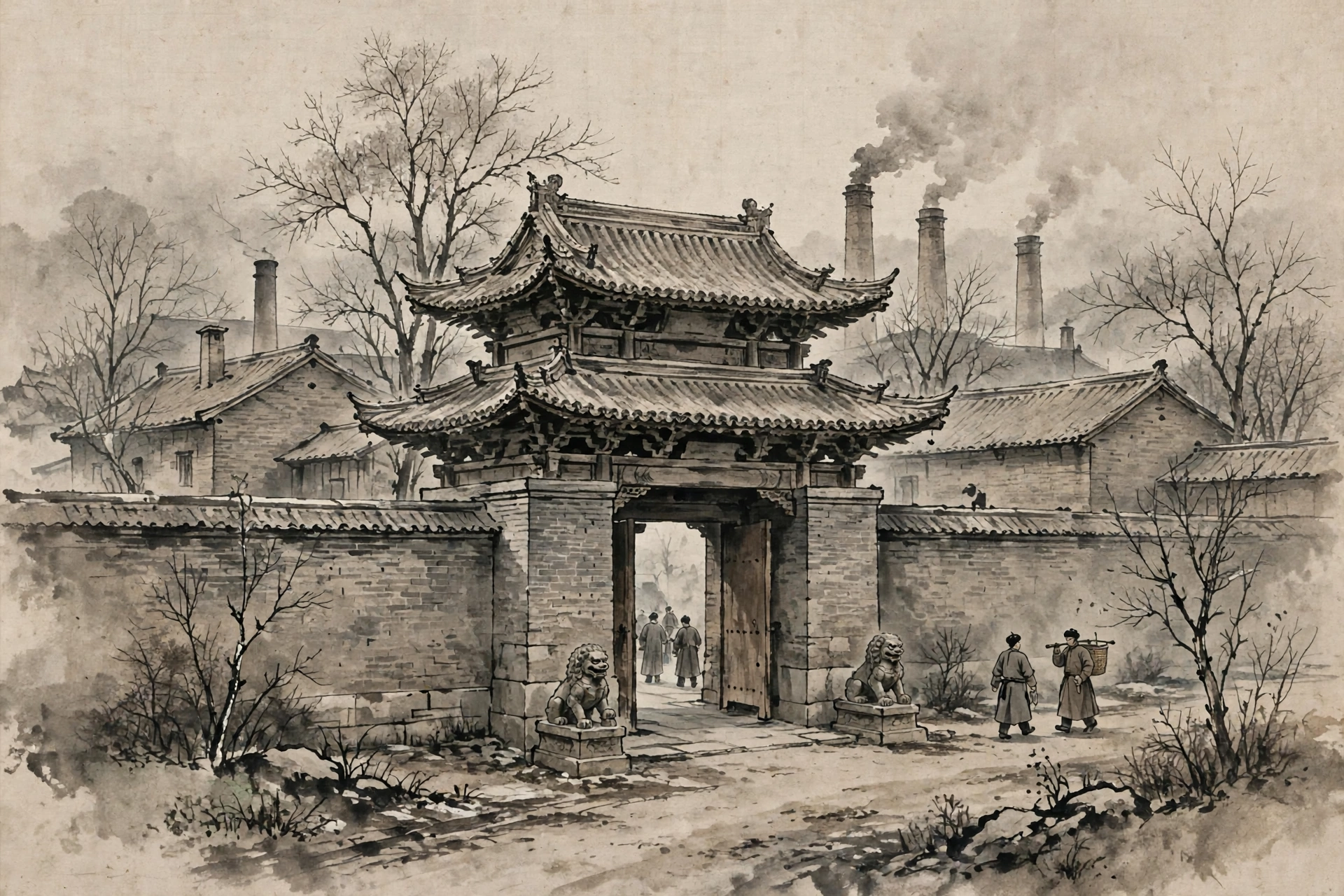
Construction began in March 1882. The price tag was staggering for the time: nearly 2.5 million taels of silver, an astronomical sum for a frontier garrison town. What rose on the riverbank was Northeast China’s first mechanized factory complex, a place where traditional Chinese courtyard walls enclosed Western steam machinery.
Think of it as China’s answer to the same impulse that built Japan’s state arsenals in the Meiji era. While Li Hongzhang was building the famous Jiangnan and Jinling arsenals down south, the northeast got exactly one: this one.
The gun factory that printed money
Here is the detail that surprises everyone. The Jilin Arsenal did not just make guns. In 1882, the same year it opened, it produced China’s first batch of machine-made silver coins: the “changping one tael” (厂平壹两) dollars, struck in five denominations. The characters on the coins were brushed by Wu Dacheng himself, a noted epigrapher as well as an official.
From 1896 onward, the factory minted standard “dragon dollars” (光绪元宝). Between 1901 and 1907 alone, the Jilin mint struck over 4.7 million seven-mace-two-candareen silver dollars. Today those early Jilin coins are prized collector items.
So the building you walk through made two things that shaped modern China: weapons and currency. Few factory sites anywhere can claim both.
Looted twice, reborn once
The arsenal’s luck ran out fast. In September 1900, during the Boxer Rebellion, Russian troops occupying the northeast smashed the factory and carried off or destroyed every machine, archive, and finished product. After the Russians withdrew in 1901, the site limped on as a mint only.
The twentieth century was not kinder. In 1928, the warlord-era governor Zhang Zuoxiang rebuilt the compound with 4-meter-high brick walls and corner gun towers. After Japan seized Manchuria in 1931, the occupiers looted the remaining stockpiles, carted the machinery away as war booty, and turned the buildings into a puppet police school, then a Kwantung Army warehouse. After 1949 it became a state machinery plant, the Jiangbei Machinery Factory, until the factory moved out in 2001.
What survived: the original north gate and the 1928 ammunition depots. In 2019 the site was listed as a national-level protected heritage site (全国重点文物保护单位). Then came the rebirth: from 2024, under a “minimal intervention” restoration, the old workshops became exhibition halls, the walled compound opened its gates, and the 1881 Jilin Arsenal Exhibition Hall opened on May 1, 2024. More than 800,000 people visited in the first year. A container café and a community library followed in 2025.
If you know London’s Tate Modern, a power station turned art gallery, you know this story’s shape. Jilin’s version just took 140 years and two foreign invasions to get there.
Visiting today
The site sits at 204 Jiangwan Road, Dongjuzi Street, Changyi District (昌邑区东局子街江湾路204号), on the north bank of the Songhua, a short taxi ride from the city center. It now operates as part of the Jilin City Art Center (吉林市艺术中心).
- What to see: The restored north gate, the 1928 brick ammunition depots, and the exhibition halls with old machinery, documents, and the coin story. The courtyard has become a public square with regular cultural events.
- The coin angle: Ask about the 厂平壹两 display if there is one on show. Holding the idea in your head, a silver dollar designed by the same man who founded the factory, makes the visit.
- Combine it with the Manchu roots trail: the arsenal is a Qing-dynasty story, the Manchu museum is the culture that built the dynasty. They belong to the same afternoon.
- Timing: Allow 2 hours. The site is popular with local residents, mornings are calmer.
Practical note: exhibition schedules and any ticket policy can change. The site spent decades as a closed factory and only fully opened to the public in 2024, so check locally before making a special trip.
FAQ
Is this the same as the other Qing arsenals? No. The famous ones, Jiangnan (Shanghai) and Jinling (Nanjing), were Li Hongzhang’s projects in the south. Jilin’s was Wu Dacheng’s, and it was the only modern arsenal in the entire northeast. That regional monopoly is what makes it historically significant.
Can I see the original silver coins? The 1882 “changping one tael” coins are museum-grade rarities now, scattered in collections. The exhibition hall tells the minting story; whether original specimens are on display varies. Don’t expect to buy one in the gift shop.
Is it really from 1881 or 1882? Both, depending on what you count. Wu Dacheng’s proposal went to the throne in 1881; construction started in March 1882. The exhibition hall uses “1881” in its name. Historians use 1882 for the founding.
How does this fit a short trip? It’s a half-day heritage stop, not a full-day destination. Pair it with the riverside and the Manchu museum for a Qing-dynasty-themed day. See the 2-day itinerary for how it slots in.
Part of our Culture & Heritage series. For the full trip plan, see the Jilin City Travel Guide.