Beishan Park Temples: Three Religions on One Hill in Jilin
The essentials in 30 seconds
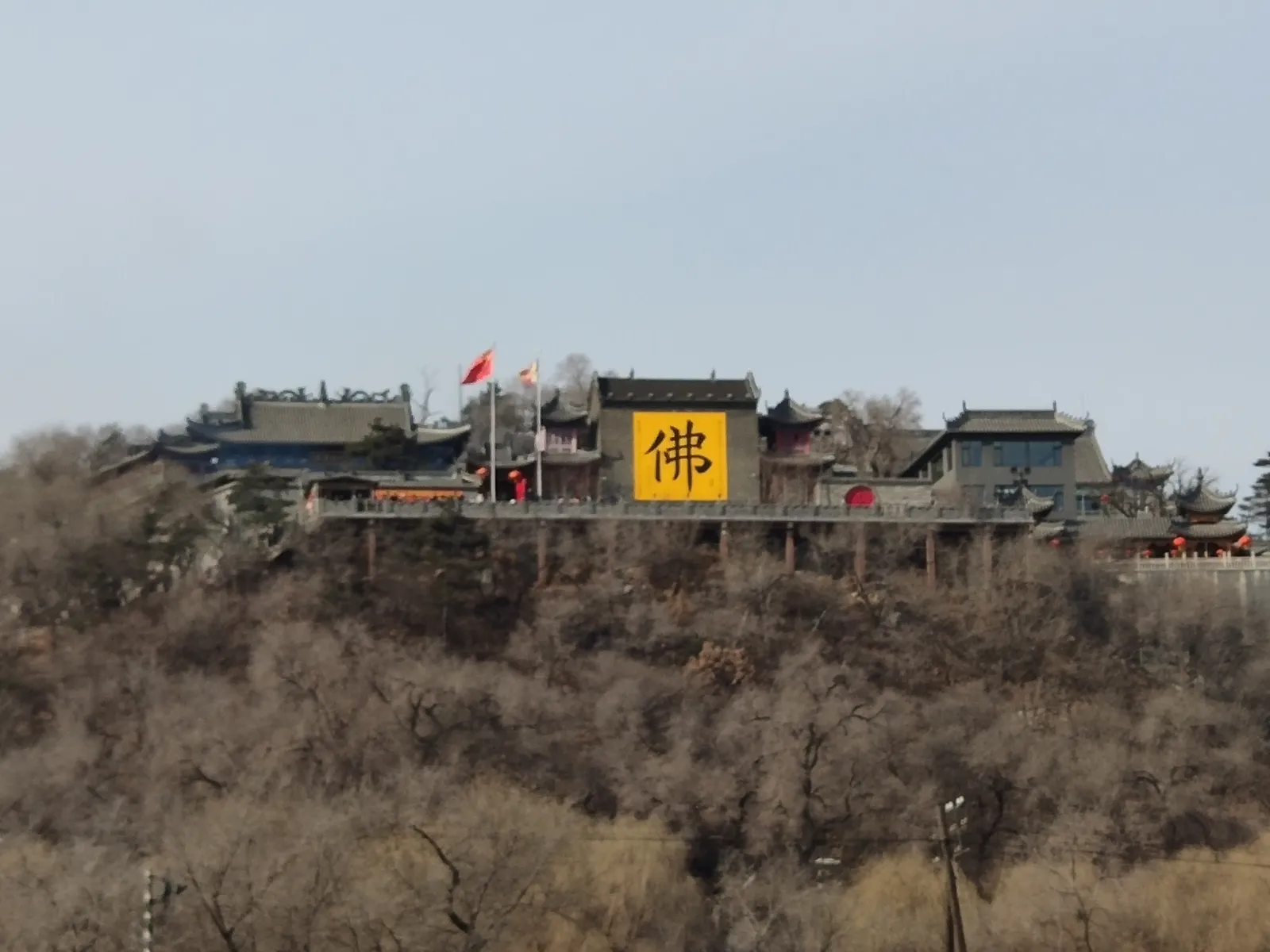
- What it is: A cluster of Qing-dynasty temples stacked up one hill inside Beishan Park, Jilin City. Taoist, Buddhist, and folk shrines share the same slope, some of them three centuries old.
- The big three: Guandi Temple (1701, the oldest), Yaowang, the Medicine King Temple (1738), and the Jade Emperor Pavilion (1776, the largest). A Confucian-linked hero, a healer, and the top god of the Taoist pantheon, all within a ten-minute climb of each other.
- Today: The complex is a provincial protected heritage site (since 1987). The park itself has been free since 2011, and the temple fair is national intangible cultural heritage. Allow 2 to 3 hours.
One hill, three religions
Most temple hills in China belong to one faith. Beishan belongs to all of them. Monks were building on this hill as early as the 16th century, long before it became a park in 1924. Over the centuries, Taoist halls, Buddhist nunneries, and folk shrines accumulated side by side until the slope read like a directory of the Chinese spiritual world.
If you know Kyoto’s Fushimi Inari, you know a mountain covered in shrines. Beishan is the same shape with a different logic: Fushimi is one faith repeated ten thousand times, while Beishan is many faiths sharing one hill. The cousin-not-twin part matters. This is not three religions tolerating each other out of politeness. It is the Chinese folk-religious habit of adding gods rather than choosing between them: the same visitor burns incense to the Jade Emperor, then to the Medicine King, then to Guan Yu, in a single morning, and sees no contradiction. The hill works the way a food court works. Each hall is a different counter, and everyone eats at several.
The three halls that matter most
Guandi Temple (关帝庙), 1701. The oldest building on the hill, dedicated to Guan Yu, the third-century general turned god of loyalty. Guan Yu sits at the meeting point of Confucian virtue and folk worship, which is why his temple anchors the complex: every tradition on the hill claims him. The main hall still hangs a plaque reading 灵著幽岐, brushed by the Qianlong Emperor himself during his eastern tour in 1754. The hall also shelters Guanyin and Weituo, because of course it does.
Yaowang Temple (药王庙), 1738. Dedicated to the Medicine King tradition: the legendary Three Sovereigns, Sun Simiao (the Tang-dynasty physician still called the King of Medicine), and famous doctors through the ages. Locals come here to pray for health, and the temple fair on the 28th day of the fourth lunar month is one of the hill’s biggest days. The temple has an unusual footnote: its basement hosted secret meetings of Kim Il Sung during his years of activity in Jilin, and later became a small site of China-Korea friendship education.
Jade Emperor Pavilion (玉皇阁), 1776. The largest temple in the complex, dedicated to the Jade Emperor, the supreme god of the Taoist pantheon, alongside the Tang Emperor Xuanzong. It was substantially rebuilt in 1926 and repaired again in the 1980s. Two pagodas once stood behind it; they did not survive the Cultural Revolution, and the empty space is part of the building’s story.
Around them sit the smaller pieces: Kanli Palace (1908), honoring the sun god and the fox immortal Hu Xian, pure folk religion; Zhiguang Temple (1919) and Guangji Temple (1922), both originally Buddhist nunneries, both damaged or displaced in the twentieth century and rebuilt or relocated in the 1990s.
Fairs, not just buildings
The temples are only half the reason to come. Beishan’s temple fairs are the living half. The calendar runs on the lunar month: the 8th day of the fourth month (Buddha’s birthday), the 18th (the Niangniang goddess fair), and the 28th (Medicine King plus Guandi together, the biggest). Since 1999 the park has also run a Spring Festival fair every year. In 2011 the Beishan temple fair was listed as national intangible cultural heritage, which puts the incense smoke and the snack stalls on the same official register as the buildings.
Come on a fair day and the hill stops being a museum. Come on an ordinary weekday and it becomes something else: retirees practicing tai chi and sword forms in the courtyards, incense vendors at the stone steps, the city spreading out below the west peak.
Visiting today
Beishan Park sits in Chuanying District, an easy city-bus or taxi ride from the riverfront. See the travel guide for the route. Entry to the park has been free since January 1, 2011.
- The climb: stone steps from the gate to the west peak (269.8 meters). Count on 2 to 3 hours if you enter the temple halls; the hilltop pavilions (the Ping’an Bell Tower, rebuilt 1964, and Lanyue Pavilion, 1976) give the best city views.
- How to visit the halls: the temples are active places of worship. Behave the way you would in any working church: quiet voice, no flash where worshippers are praying, follow posted rules. Buying a stick of incense from the step vendors and offering it is normal and welcomed.
- Fair days are spectacular and crowded. If crowds are not your thing, pick a weekday morning instead.
- Safety note: in June 2024, four visiting American instructors were stabbed in the park by a lone attacker, who was arrested. It was treated as an isolated incident, but it is worth knowing; keep the normal awareness you would keep in any busy public park.
Pair it with the Confucian Temple across town for the full arc: the state’s formal Confucianism in the morning, the people’s crowded pantheon in the afternoon.
FAQ
Is Beishan Park free? Yes. The park abolished admission on January 1, 2011, and merged with the neighboring People’s Square. Individual temple halls may ask for small incense or entry donations.
Which temple should I visit if I only have an hour? The Jade Emperor Pavilion for scale, Guandi Temple for age and the Qianlong plaque, Yaowang Temple if health prayers interest you. They are all on the same climbing route.
Are the temples Taoist or Buddhist? Both, plus folk religion and Confucian-linked worship. That mixture is the entire point of Beishan: one hill, many altars.
When are the temple fairs? The big traditional dates are the 8th, 18th, and 28th days of the fourth lunar month, plus the Spring Festival fair each year since 1999. Dates shift with the lunar calendar, so check before you go.
Part of our Culture & Heritage series. For the full trip plan, see the Jilin City Travel Guide.